A double roller press granulator helps your plant choose the right dry granulation route for compound fertilizer or organic fertilizer. You can compare raw material moisture, hourly capacity, and the finished granule size before selecting a model. The machine presses chicken manure, crop straw, humic acid, and sewage sludge into dense sheets, then breaks the sheets into uniform granules. This dry route fits a fertilizer production line without a dryer or cooler.
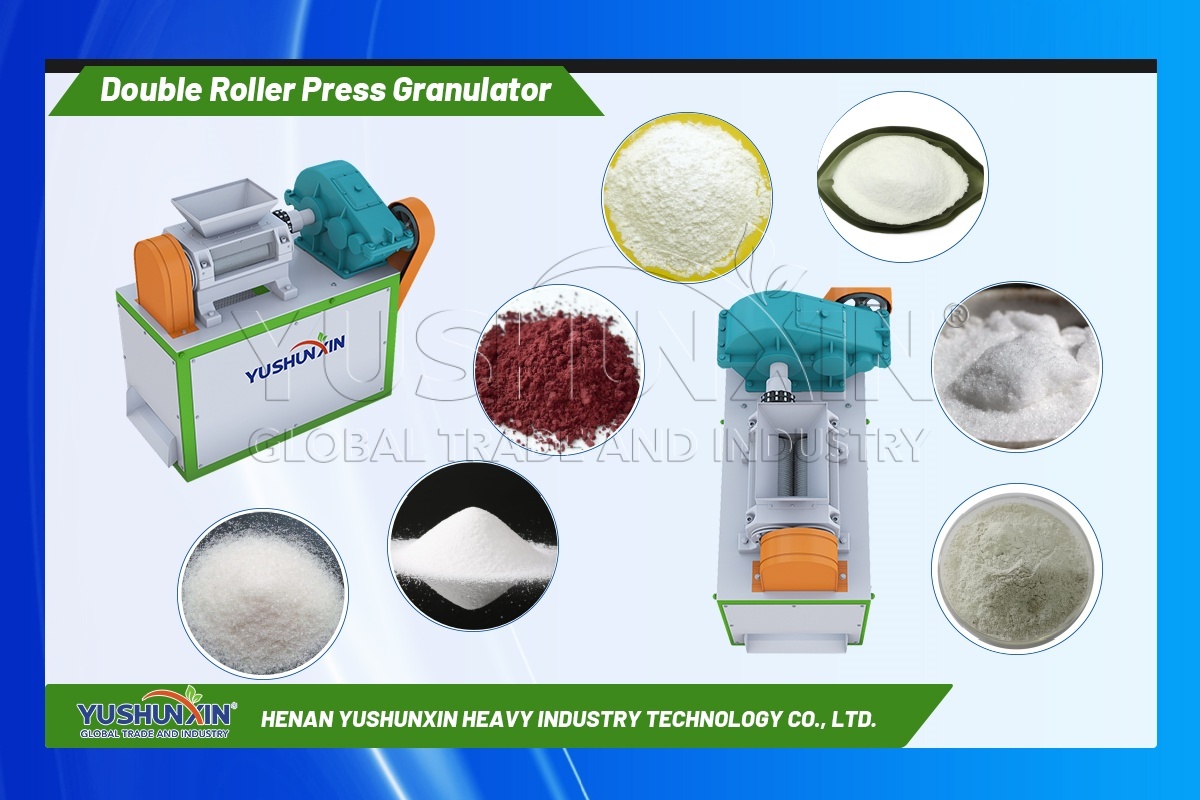
double roller press granulator
How does raw material choice affect a double roller press granulator?
Chicken manure and sewage sludge may need dewatering or fermentation before pressing, while crop straw and humic acid may need crushing and blending. Your operators can adjust roller pressure and feed speed when the material changes from soft organic matter to dense mineral powder. A steady feed keeps the powder layer even between the rollers and reduces dust. This control helps the double roller press granulator system produce consistent granules from different raw materials.
How do capacity and granule size guide model selection?
Smaller roller models often support about 1 to 1.5 tons per hour, while larger rollers support 1.5 to 3 tons per hour. Your team can match the machine to the daily output and choose a mold that forms the required particle size. Compound fertilizer granules commonly fall between 4 mm and 5 mm, while special materials may need 8 mm or 10 mm. The double roller press granulator line can also use pillow, cylindrical, or flat-spherical molds for different market needs.
How does dry roller granulation fit a fertilizer manufacturing system?
The dry route removes the dryer and cooler, so your plant uses less energy and occupies less space. You can connect a horizontal mixer, chain crusher, the roller granulator, a screening machine, and a packaging scale into one flow. The screen returns fine powder to the feed, which raises material use. This arrangement supports a fertilizer extrusion technology for both compound and organic fertilizer. You can also review organic fertilizer extrusion technology to see a complete dry granulation line in operation.
How can plant owners compare roller press machines before purchase?
You can compare roller size, motor power, pellet shape, and the type of supporting equipment your project needs. A simple production scheme may use a storage bin instead of an automatic batching system, which lowers the initial budget. Your team can add an automatic batching system later when the plant grows. For background on organic nutrients, you can read the organic fertilizer reference. A fertilizer machinery manufacturer can provide roller specifications and a line drawing for your capacity.
Yushunxin supplies double roller press granulators and supporting equipment for dry granulation plants. If your team has interest in the machine, you can learn more about https://www.extruder-granulator.com/double-roller-extruder-granulator.