If you already have stable, finished compost and plan to convert it into commercial fertilizer granules, the price of a granulator alone cannot represent your total equipment investment. The actual budget depends on compost moisture, particle size, target capacity, granulation method, drying requirements, granule specifications and automation level.
Before comparing quotations, define the condition of your finished compost and the product you want to sell. YUSHUNXIN granular compost plant budget guidance can help you separate the essential granulation equipment from optional upgrades and site-related expenses.
Start with the Condition of Your Finished Compost
An industrial compost granulation project starts after fermentation is complete. The feedstock entering the line may be finished chicken manure compost, cow dung compost, biogas digestate compost, food-waste compost or a mixture of several composted materials.
Although these materials have already been composted, their processing characteristics can still differ significantly. Before selecting equipment, confirm:
- Type and proportion of the finished compost
- Available tonnes per day
- Moisture content
- Particle size
- Bulk density
- Fibre content
- Presence of stones or other impurities
- Additional minerals or nutrients
- Required granule diameter
- Target hourly production
- Required bag size
Stable and mature compost normally enters the granulation stage more smoothly than uneven material containing large cakes, excessive fibres or unstable moisture.
If the compost is too coarse, it may need crushing before mixing. If it contains foreign materials, an additional screening stage can protect the granulator and improve final product consistency. These conditions affect both the equipment configuration and the project budget.
What Equipment Is Needed from Finished Compost to Bagged Granules?
For customers who already have finished compost, the granulation line normally begins with material feeding and conditioning rather than manure fermentation.
A typical process may follow this route:
Finished compost → feeding → crushing → screening → batching → mixing → granulation → drying and cooling if required → final screening → coating → weighing and packaging
The equipment budget for a 1–5 t/h compost pellet project may therefore include:
- Feed hopper
- Compost crusher
- Preliminary screening machine
- Batching system
- Fertilizer mixer
- Compost granulator
- Dryer and cooler
- Final rotary screener
- Return-material conveyor
- Coating machine
- Fertilizer weighing and packing machine
- Belt conveyors
- Dust collection
- Electrical control system
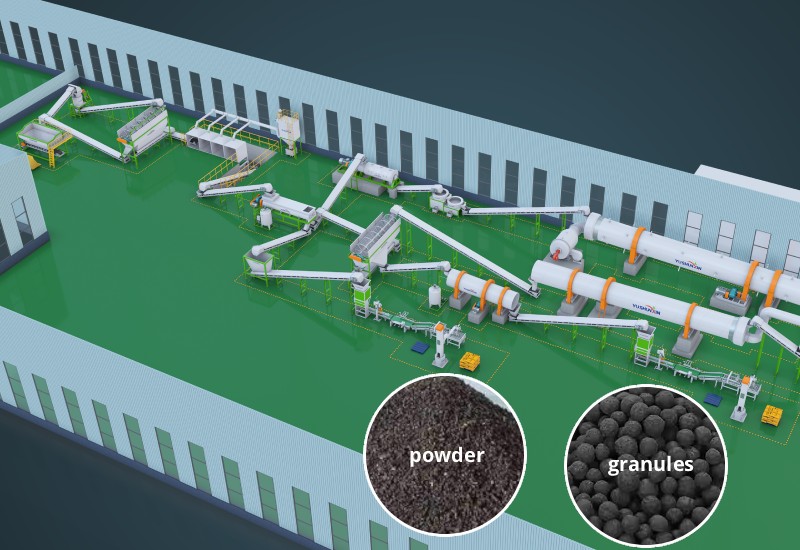
Not every project needs every machine. The final configuration depends on whether the compost requires wet or dry granulation and whether the customer needs a basic line or a highly automated production system.
When reviewing a quotation, check whether it covers only the granulator or the complete process from finished compost feeding to packed fertilizer granules. Conveyors, platforms, electrical controls, dust collection and installation services may otherwise appear as additional costs later.
How Do Wet and Dry Granulation Affect the Investment?
Moisture is one of the main inputs for choosing the granulation route. When you compare wet and dry compost granulation budgets, evaluate the entire production line rather than comparing only the prices of different granulators.
| Finished compost condition | Suitable direction | Main effect on the budget |
|---|---|---|
| Dry and finely crushed compost | Double-roller extrusion | May avoid conventional drying and cooling |
| Compost that accepts water or binder | Disc granulation | Economical granulator, but drying may be required |
| Medium- or large-scale continuous production | Rotary drum granulation | Requires a more complete drying, cooling and conveying system |
| Fibrous organic compost | Stirring-tooth granulation | Configuration depends on moisture and fibre content |
| Spherical premium granules required | Granulation plus polishing | Adds shaping and material-handling equipment |
Dry granulation can shorten the production line
For dry extrusion, finished compost with moisture below approximately 20% can serve as an initial reference. The actual allowable moisture depends on the material’s flowability, fibre content and behaviour under pressure.
A dry granulation line may include:
Feeding → crushing → batching → mixing → roller extrusion → screening → packaging
Because the process does not normally add water, the line may not need a conventional rotary dryer and cooler. This can reduce the equipment quantity, fuel demand and workshop space.
However, dry extrusion does not suit every compost. Material that is too wet may stick to the rollers or feed unevenly, while excessive fibres may affect granule formation.
Wet granulation provides more shaping options
Disc, rotary drum and stirring-tooth granulators usually use moisture, steam or a binder to promote particle formation.
A wet granulation line may include:
Feeding → crushing → batching → mixing → granulation → drying → cooling → screening → coating → packaging
Because the process introduces liquid, the system normally requires drying and cooling. The budget may also need to cover a heat source, exhaust handling and additional conveyors.
Wet granulation generally gives the producer more flexibility in granule shape and formula design, but it also creates a longer process and higher energy demand.
The route decision can therefore balance material suitability, target granule quality, available utilities and equipment investment.
How Does Capacity Change the Reference Budget?
Capacity affects more than the size of the granulator. It also determines the specifications of the crusher, mixer, dryer, cooler, screener, conveyors and packaging machine.
Current reference equipment-budget ranges on the target page include:
- Approximately USD 60,000–150,000 for selected 1–5 t/h configurations
- Approximately USD 150,000–360,000 for selected 5–10 t/h configurations
- Approximately USD 360,000–550,000 for selected 10–20 t/h configurations
These figures are reference ranges rather than fixed quotations. A compact dry extrusion line and a complete wet drum granulation line can have very different prices even when their nominal capacities are similar.
A dedicated 5 t/h compost pellet line equipment proposal illustrates this difference. A 5 t/h project may use multiple roller granulators, several disc granulators or a rotary drum system. Each route creates a different equipment list, workshop layout and utility requirement.
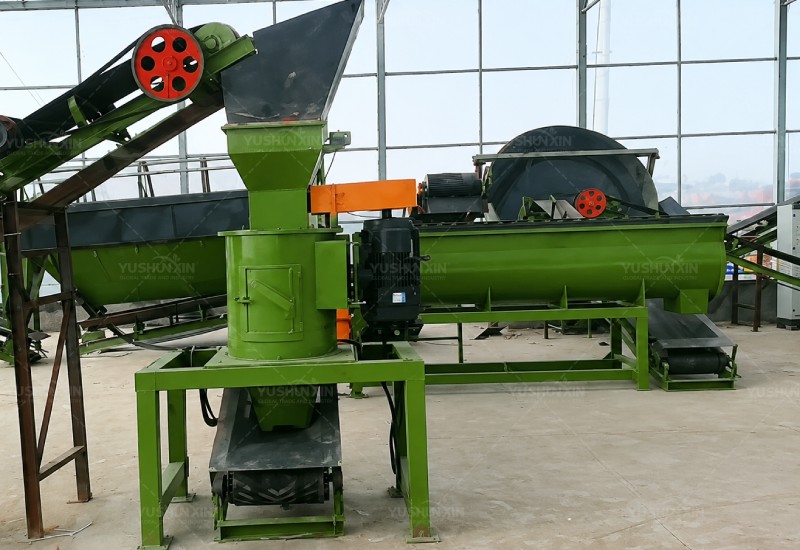
Capacity can also be calculated according to saleable output rather than the maximum rating of the granulator.
For example, a granulator rated at 10 t/h may not continuously produce 10 tonnes of qualified finished granules every hour. Oversized particles, fines, recycled material, formula changes and cleaning stops may reduce saleable production.
Before deciding the required capacity, confirm:
- Tonnes of finished compost available each day
- Planned production hours
- Required tonnes of granules per day
- Number of formulas
- Expected screening return
- Seasonal production changes
- Future expansion requirements
This calculation helps avoid buying an undersized line that restricts production or an oversized line that runs below its economical loading level.
Which Expenses Can Affect the Complete Granulation Project?
The machinery purchase is only one part of the investment. Customers can also evaluate the costs of installing and operating the equipment in their existing facility.
Workshop and civil works
Possible expenses include:
- Equipment foundations
- Steel platforms
- Raw compost storage
- Finished-granule storage
- Internal material-handling space
- Electrical room
- Ventilation
- Drainage
- Fire-safety provisions
If you already have a suitable workshop, the line can be designed around the available dimensions. However, limited height or narrow access may affect the arrangement of the dryer, cooler, bucket elevator and storage bins.
Utilities
The supplier will normally need to know:
- Electrical voltage and frequency
- Transformer capacity
- Available dryer fuel
- Water supply
- Compressed-air conditions
- Ventilation and exhaust conditions
Wet granulation lines usually have higher thermal requirements because they include drying. Larger conveying distances and highly automated packaging systems can also increase the connected electrical load.
Transportation and installation
International projects may involve:
- Sea or land freight
- Insurance
- Import charges
- Port handling
- Equipment unloading
- Installation supervision
- Commissioning
- Operator training
Clarifying the supply boundary helps you compare quotations on the same basis.
Operating expenses
Daily granulation costs may include:
- Electricity
- Dryer fuel
- Labour
- Binder or additives
- Packaging bags
- Wear parts
- Lubricants
- Routine maintenance
- Dust-collection consumables
- Product testing
The equipment cost for converting finished compost into fertilizer pellets can therefore vary according to both the selected process and the auxiliary systems required to maintain stable production.
How Can You Control the Budget Without Weakening the Line?
Effective cost control removes unnecessary equipment while retaining the machines that protect production stability and product quality.
Possible approaches include:
- Selecting dry extrusion when the finished compost meets the moisture requirement
- Matching dryer capacity to the actual water-removal load
- Choosing semi-automatic packaging for the initial production stage
- Reserving space for future automatic bagging and palletizing
- Using modular granulators for phased capacity expansion
- Reducing unnecessary conveying distances
- Reusing suitable workshop buildings and utilities
- Designing an efficient return system for off-size granules
- Separating essential equipment from optional upgrades
Reducing the process too aggressively may create higher operating costs later. For example, removing the dryer from a wet granulation line can leave excessive moisture in the fertilizer granules. This may cause bag caking, deformation or poor storage performance.
Similarly, removing the final screening stage may allow oversized particles and fines to enter the finished product.
A lower initial price is useful only when the simplified configuration still matches the compost condition and final product requirements.
What Information Is Needed for an Industrial Granulation-Line Proposal?
For a quotation for an industrial finished-compost granulation line, prepare the following information:
- Type of finished compost
- Compost photographs or samples
- Available compost quantity per day
- Moisture content
- Particle size and fibre content
- Bulk density
- Additional fertilizer ingredients
- Required hourly capacity
- Required daily output
- Target granule diameter
- Required granule shape
- Operating hours per day
- Workshop dimensions
- Local voltage and frequency
- Available heating fuel
- Bag size
- Required automation level
- Installation country
- Approximate equipment budget
Based on these inputs, YUSHUNXIN can compare suitable wet and dry granulation routes, select the required auxiliary machines and prepare a preliminary equipment configuration and layout.
The proposal will focus on converting your existing finished compost into uniform, marketable fertilizer granules. Upstream manure fermentation equipment does not need to be included when your composting process is already complete.
You can learn more about reference capacities, granulation methods and equipment-budget ranges before preparing your inquiry.
To receive a preliminary proposal, send your finished compost information, target capacity, required granule specifications and workshop dimensions through:
https://www.granulatedcompostsolutions.com/product/granular-compost-fertilizer-plant-cost/


