What Are the Most Common Mini Industrial Fryer for Small Food Factory Maintenance Issues and How Can They Be Prevented?

A small snack factory or a pilot plant that runs a mini fryer depends on clean oil and steady temperature to avoid stops. The mini industrial fryer for small food factory carries the product on a stainless mesh belt, and most maintenance issues start in the oil or the belt. This article explains the common problems and the checks that keep a food production line running.

mini industrial fryer for small food factory

How Does Oil Build-Up Stop the Fryer?

The food residues collect in the oil and burn onto the tank, so the oil darkens and the product picks up off flavors. The compact continuous fryer with a stainless mesh belt needs the oil filtered and changed on a schedule, and the tank drained and cleaned. A clean oil keeps the food manufacturing quality and the fryer steady.

How Does the Belt Wear Affect the Product?

The mesh belt carries the product through the oil, and a loose or damaged belt lets the pieces stick or drop. The small automatic fryer with temperature control needs the belt tension and the links checked, because a worn belt slows the line. This check protects the food handling and the output.

How Should a Plant Prevent Downtime?

A plant schedules the oil filter, the belt, and the temperature checks on a fixed cycle, because a planned stop costs less than a failed fryer during a run. The fryer supports a liftable cover and a drainable tank, so the clean stays short. This preventive care protects the food equipment uptime.

How Does the Fryer Connect With a Larger Line?

A mini fryer works best when the drained product arrives on a belt and the fried product leaves to cooling or seasoning. The machine connects with a continuous fryer for a larger food line, a drainer, and a packer. A smooth connection keeps the food processing system moving.

How Should a Plant Verify the Supplier?

Frying rewards a supplier that offers spare parts and service, because the fryer runs hot. You can review the mini fryer manufacturer before a purchase, and that review shows the heating and support. A scheduled routine turns the food machinery decision into dependable uptime.

How Does the Temperature Drift Lower Quality?

The temperature sensor and the control hold the oil steady, so the product fries to the same color instead of running too light or too dark. A drifted setting makes the snack uneven and raises the rejects. A plant that checks the sensor keeps the food manufacturing result consistent. This control is the quality safeguard that the maintenance routine protects.

Conclusion

The most common mini industrial fryer issues are oil build-up and belt wear, and a plant prevents them with a fixed filter, belt, and temperature schedule. These habits keep the food production line running. A well planned line therefore stays productive across the full shift. A clean fryer also keeps the product color even from the first batch to the last. If you have interests, you can learn more about https://www.friedfoodsolutions.com/mini-continuous-fryer-machine/

Which Leafy Vegetables Can Be Processed Efficiently with an Industrial Air Dryer Food?

A salad factory, a fresh-cut supplier, or a central kitchen that dries leafy vegetables after washing needs an air dryer that removes surface moisture without bruising the leaves. The industrial air dryer food for leafy vegetables offers parallel and turning designs, and each fits a different leaf type. This article explains which leafy greens the dryer handles and how the food processing step stays efficient.

industrial air dryer food

Which Air Dryer Type Fits Leafy Vegetables?

The parallel air dryer suits flat, whole leaves, while the turning or tumble air dryer suits cut and smaller pieces, so the choice follows the leaf size. The parallel and turning air dryer for a food processing line uses strong airflow to lift the surface moisture after washing, blanching, or freezing preparation. A factory that matches the type to the leaf keeps the food manufacturing dry even and the leaf intact.

How Does Airflow Protect Leafy Green Quality?

The airflow removes the surface water that causes mold and short shelf life, so the dryer protects both the appearance and the storage. The air drying machine for washed leafy greens handles lettuce, spinach, cabbage, and cut salad mix, and a steady air flow keeps the leaves from clumping. A plant that dries fully before packing keeps the food preparation quality high.

How Does the Dryer Connect With Washing and Cutting?

An air dryer works best when the washed and drained leaves arrive on a belt and the dried product leaves directly to packing. The line connects with a washer, a drainer, and a leafy vegetable cutting machine for a drying line, and each handoff needs a matched speed. A smooth connection keeps the food processing system moving and the leaves dry.

How Should a Buyer Match the Dryer to the Volume?

A buyer matches the dryer capacity to the daily leaf volume, because a small salad line and a large fresh-cut plant need different sizes. The parallel and turning machines scale to the output, so the plant picks the size that fits the wash line. This match keeps the food machinery cost proportional to volume.

How Should a Factory Verify the Dryer?

Drying leafy greens rewards a trial with the plant’s own leaves, because moisture and leaf size change the airflow. You can review the air dryer manufacturer before a purchase, and that review shows the airflow and service support. A measured run turns the food machinery decision into a dependable result.

How Does the Dryer Reduce Mold and Extend Shelf Life?

Surface water is the main trigger for mold and early spoilage, so a complete air dry extends the storage time and keeps the leaves crisp. The dryer removes the moisture that a drainer alone leaves behind, and that dry surface travels better in a bag. A salad supplier that dries fully before packing sends a product that stays fresh longer. This shelf life benefit is the food preparation result that the air drying step protects.

Conclusion

Leafy vegetables such as lettuce, spinach, and cabbage dry efficiently on an industrial air dryer when the factory matches the parallel or turning type to the leaf and connects the dryer to washing and cutting. These choices keep the food production line clean and the shelf life long. If you have interests, you can learn more about https://www.hadofps.com/products/air-dryer/

How Can a Commercial Vegetable Washer Machine Price 2026 Reduce Labor in a Small-Scale Plant?

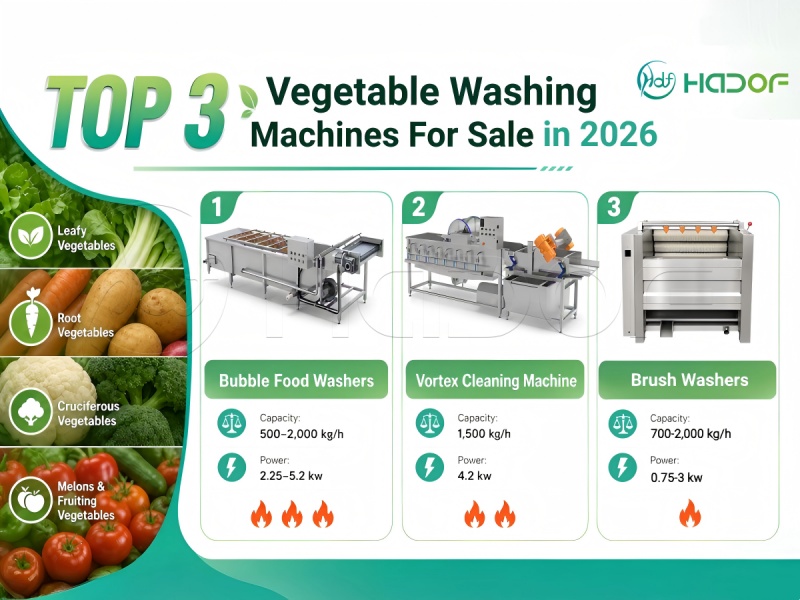
A small salad maker, a fruit processor, or a fresh-cut supplier that still washes produce by hand spends hours on a step a machine can finish steadily. The commercial vegetable washer machine price 2026 covers air bubble, vortex, and brush roller washers, and a small plant picks the one that matches its produce. This article explains how the right washer removes hand washing and lowers the food production cost.

commercial vegetable washer machine price 2026

How Does a Washing Machine Replace Manual Labor?

Manual washing assigns workers to fill tubs, agitate the produce, and lift it out, and the work is slow and inconsistent. The air bubble washer for delicate produce cleans leaves and soft fruit gently while the water carries dirt away, so one machine replaces several hands. A small plant that installs a washer reassigns workers to sorting and packing. This change removes the heaviest food handling work from the line.

How Does the Vortex Washer Clean Cut Vegetables?

The vortex washer creates a rotating water flow that reaches sand and debris on cut pieces, so it suits mixed and irregular produce. The vortex vegetable washing machine for a small line deep-cleans while the product keeps its shape. A small plant that processes cut vegetables uses this machine to reduce rework. This deeper clean protects the food manufacturing quality.

How Does the Brush Washer Handle Roots?

The brush roller washer uses rotating brushes and a water spray to clean and peel roots, so potatoes and carrots leave the washer ready for cutting. A small root line uses this machine to remove soil without hand scrubbing. This step cuts the food preparation time for firm produce. A buyer who picks the brush option completes the washing range.

How Should a Small Plant Match the Machine to the Produce?

A small plant picks one washer for its main product, because a leaf line and a root line need different cleaning force. The air bubble washer protects soft leaves, the vortex washer cleans cut pieces, and the brush washer peels roots. A factory that classifies its produce by delicacy and soil keeps the food equipment footprint small.

How Does the Washer Choice Affect Water and Energy Cost?

The washing method also changes the water and power a small plant uses, so the price should include the operating cost rather than only the machine. A bubble washer uses water circulation and gentle bubbles, while a vortex washer uses a rotating flow, and each consumes water at a different rate. A plant that adds a circulating tank and a sedimentation zone reuses water longer and lowers the replacement frequency. This attention to the food processing system keeps the monthly cost low, and a buyer who records water and energy together makes a more accurate food machinery decision.

How Should a Buyer Verify the Washer?

Vegetable washing affects shelf life and safety, so a buyer checks construction and service. You can review the vegetable washer manufacturer before a purchase, and that review shows the stainless build and support. A trial with the plant’s own produce turns the food machinery decision into a dependable saving. A related vortex vegetable washing machine for a cleaning line completes the same processing line.

Conclusion

A commercial vegetable washer machine in 2026 reduces labor in a small plant by matching the washer type to the produce, from gentle bubble cleaning to root brushing. These choices keep the food production line clean and the team small. If you have interests, you can learn more about https://www.hadofps.com/news/top-3-vegetable-washing-machines-for-sale-in-2026/

What Is the Payback Period for an Industrial Vegetable Sorting Table in a Medium-Scale Food Factory?

A medium-scale fresh-cut vegetable factory that trims, sorts, and inspects cabbage, lettuce, spinach, carrots, or potatoes usually wants to know how quickly a sorting workstation will pay for itself before approving the purchase. The payback period for an industrial vegetable sorting table for fresh-cut vegetable processing compares the delivered equipment cost with the labor hours, rework, and material loss the table removes from daily operations. This article explains the cost items, labor drivers, throughput effects, and a simple way to estimate payback in months for a medium-scale food factory.

What Cost Items Belong in the Payback Calculation?

The payback period starts with the total landed cost of the equipment, not only the machine price. A buyer should add the purchase quotation, delivery, installation, and any layout changes to the workstation area, then divide by the monthly benefit. For a sorting line, the product page lists an investment range of roughly USD 4,500 to USD 8,500 depending on workstation quantity and conveyor structure, so a six-station model fits the upper part of that range while a two-station model fits the lower part. Cleaning time, spare cutting-board holders, and operator training also belong in the calculation because they affect the first weeks of use.

How Does Manual Sorting Currently Consume Labor Hours?

Before automation, a factory often assigns several workers to remove rotten material, trim roots, reject damaged vegetables, and prepare produce for cutting or peeling. These tasks are repetitive, hard to supervise, and vary with raw-material quality, which makes labor cost difficult to predict. A dedicated manual cutting and sorting table with waste collection centralizes these jobs at fixed workstations with a cutting-board holder and waste hole, so supervisors can measure output per station and workers no longer move between scattered tables. Because manual inspection is a core part of food safety management, the table also gives the plant a clear inspection point before produce reaches downstream equipment.

Where Does the Table Improve Throughput and Reduce Material Loss?

A six-workstation sorting line supports six operators at the same time and, according to the product information, can process about 1.5 to 3 tons per hour depending on the material. The gain comes from keeping workers at one organized station, using a frequency-controlled conveyor, and removing damaged or blackened produce before it enters a cutter, where one bad item can contaminate a batch or slow the line. When the sorting table feeds an industrial leafy vegetable cutting machine, the cutting stage receives cleaner, better-sized material, which reduces rework and blade adjustments. A stainless steel vegetable sorting table for food processing plants therefore improves both labor productivity and the value of the steps that follow it.

How Should a Factory Estimate Payback in Months?

To estimate the payback period, divide the delivered equipment cost by the expected monthly labor and waste saving. For example, if a six-station table costs USD 8,500 delivered and removes one full-time sorter and reduces rework worth USD 1,000 per month, the total monthly benefit is about USD 2,000, giving a payback of roughly four to five months. The exact number depends on local wages, shift count, and raw-material quality, but the method keeps the decision tied to real operating data instead of a vendor promise. A vegetable sorting table for a medium-scale food factory becomes easier to justify when the factory records current sorting hours, rejected-material weight, and rework time for a few weeks before requesting a quotation.

Conclusion

The payback period for an industrial vegetable sorting table depends on delivered cost, current sorting labor, material loss, and how well the station is placed in the processing line. By centralizing inspection at organized workstations, a manual inspection sorting table for vegetable processing can turn scattered manual work into measurable throughput while protecting downstream cutting and packaging. Before you buy, record your sorting hours and waste, then request a configuration and price for the workstation count that matches your layout. To compare sorting solutions for your fresh-cut or central-kitchen project, you can learn more about the equipment at https://www.hadofps.com/products/manual-cutting-and-sorting-table/