Chicken Manure Biofertilizer Plant Setup Guide: From Waste to Profitable Organic Fertilizer

With the rapid growth of poultry farming, chicken manure management has become a critical challenge—and a valuable opportunity. Setting up a chicken manure biofertilizer plant allows producers to convert waste into high-demand organic fertilizer while meeting environmental regulations and improving farm profitability.

This guide outlines the key steps, equipment, and technical considerations for building a reliable poultry manure fertilizer production line.
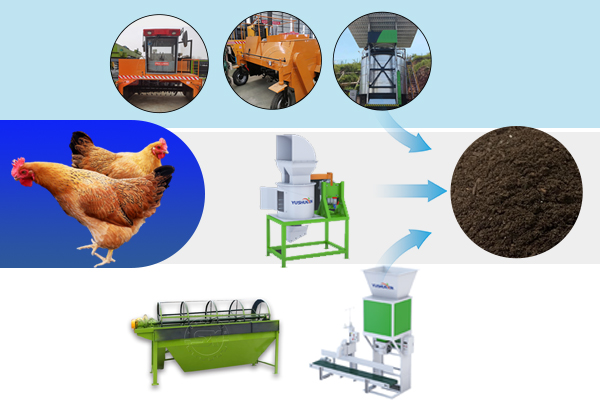
chicken manure biofertilizer making plan

Step 1: Understand Chicken Manure Characteristics

Fresh chicken manure contains high nitrogen content, moisture, pathogens, and ammonia. Direct application can damage crops, which is why fermentation and stabilization are essential.

Before plant design, it is important to evaluate:

Moisture content (typically 60–70%)

Carbon-to-nitrogen ratio

Bedding materials (rice husk, sawdust, straw)

These factors directly influence equipment selection and process configuration.

Step 2: Choose the Right Fermentation Method

Fermentation is the core of chicken manure biofertilizer production. Common options include:

Windrow composting with turners

Groove-type composting systems

Enclosed fermentation tanks for odor control

Each method has different land, labor, and investment requirements. Many modern plants prefer controlled fermentation systems for stable quality and faster composting cycles.

Step 3: Crushing, Mixing, and Moisture Adjustment

After fermentation, composted poultry manure usually requires crushing and screening to achieve uniform particle size. At this stage, additives such as humic acid, beneficial microbes, or crop residues may be blended.

Moisture adjustment is critical, especially if the next step is granulation. Stable moisture ensures smooth operation of organic fertilizer granulating machines and improves pellet strength.

Step 4: Granulation and Shaping Options

For pellet fertilizer, several granulation technologies are commonly used:

Disc granulators (pan pelletizers)

Drum granulation machines

Extrusion pellet mills

The choice depends on target capacity, fertilizer formula, and budget. A well-matched chicken manure fertilizer granulation line improves product appearance, handling, and market value. Click here to get more!

Step 5: Drying, Cooling, and Packaging

Granules usually pass through drying and cooling systems to reduce moisture to safe storage levels. Final screening removes fines, which can be recycled back into the process. Automatic bagging machines complete the production cycle.

Equipment Selection and Technical Support Matter

While many focus on individual machines, successful projects rely on process integration and technical guidance. Experienced biofertilizer equipment manufacturers often provide:

Customized plant layouts

Equipment matching based on manure properties

Commissioning and operator training

This support helps new investors avoid common mistakes and shorten the learning curve.

Final Thoughts

A well-designed chicken manure biofertilizer plant setup transforms poultry waste into a sustainable fertilizer product with strong market demand. By combining proper fermentation technology, reliable equipment, and professional process support, investors can build a stable and scalable organic fertilizer business. If you need a business plan, welcome to visit: https://www.biofertilizerproduction.com/product/solution-for-using-chicken-poop-as-biofertilizer/

Почему стоит инвестировать в линию по производству BB-удобрений? — Новые возможности для развития современной сельскохозяйственной отрасли

С развитием мировой аграрной структуры, точное внесение удобрений и эффективное производство становятся целями для сельхозпредприятий. BB-удобрения (смесевые удобрения) — это продукт, который можно гибко составлять в соответствии с потребностями почвы и культуры, из-за чего в последние годы он пользуется повышенным спросом на рынке. Все больше компаний и инвесторов при оценке новых проектов обращают внимание на линии по производству BB-удобрений. Так почему же инвестиции в такую линию — это разумный выбор? Расскажем подробнее.

Линия-по-производству-удобрений-BB-производительностью-10-т-ч

1. Высокий спрос на рынке и широкие перспективы

С ускорением процесса модернизации сельского хозяйства, фермеры и агрохолдинги всё чаще нуждаются в индивидуальных, «под заказ» смесях удобрений. BB-удобрения как раз отвечают на требования разных регионов и культур. Ожидается, что в ближайшие годы объём рынка BB-удобрений продолжит расти, а инвестиции в линию позволят занять лидирующие позиции на рынке.

2. Высокая отдача от инвестиций

Линия по производству BB-удобрений отличается высоким уровнем автоматизации, низким энергопотреблением и простотой эксплуатации, а срок окупаемости оборудования короткий. При налаженном снабжении сырьем и продаже готовой продукции производство быстро выходит на прибыль. В отличие от традиционных комбинированных смесей или однотипных удобрений, производство BB-удобрений более гибко, позволяет снизить складские запасы и оптимизировать оборотные средства.

3. Простота технологии и удобство управления

Производственный процесс BB-удобрений в основном основан на физическом смешивании, что не требует сложных химических реакций, экономит энергию и экологичен, а также предъявляет низкие требования к помещениям и отличается коротким сроком строительства. Основное оборудование — автоматическая система дозирования, смеситель, упаковочная машина — удобно в эксплуатации и требует минимального обслуживания, что делает такой бизнес привлекательным для предприятий любого масштаба.

4. Государственная поддержка и устойчивое развитие

Во многих регионах правительства поощряют инвестиции в эффективные и экологичные проекты по производству удобрений, чтобы способствовать «зелёному» развитию сельского хозяйства. Инвестируя в линию по производству BB-удобрений, можно воспользоваться субсидиями, налоговыми льготами и другими преференциями. Производственный процесс экологически безопасен, что способствует устойчивому развитию предприятия и улучшает его имидж.

5. Техническое развитие открывает путь к инновациям

С развитием производственных технологий и внедрением интеллектуального оборудования линия по производству BB-удобрений способна обеспечить точное смешивание, интеллектуальное управление и обработку данных, отвечая запросам фермеров на высококачественные продукты. Современные технологии помогают формировать конкурентные преимущества на рынке.

Инвестиции в линию по производству BB-удобрений — это правильный выбор в эпоху модернизации сельского хозяйства. Это не только позволяет удовлетворить разнообразные потребности рынка, но и укрепляет конкурентоспособность предприятия, помогая достичь экономических и социальных выгод. Если вы ищете новые возможности для инвестиций в аграрном секторе, обязательно обратите внимание на производство BB-удобрений! Для получения более подробной информации, пожалуйста, посетите:https://www.liniyaudobreniy.com/proekt-linii-po-proizvodstvu-udobreniy-bb-10-t-ch/

Toward Smarter Chicken Dung Carbon-Based Fertilizer Equipment Solutions

Modern carbon-based fertilizer manufacturing from chicken dung develops rapidly because environmental protection and resource recycling have become key trends. Each factory seeks equipment that improves production efficiency, enhances carbonization quality, and stabilizes granule uniformity. The carbon-based fertilizer production line requires a series of machines that handle chicken manure, carbon powder, and other organic raw materials under strict temperature and moisture control. In this manufacturing process, equipment innovation determines the quality of the final carbon-based fertilizer granules and the cost of the overall procedure. Therefore, understanding what equipment innovations exist in chicken dung carbon-based fertilizer production helps enterprises evaluate machinery performance and optimize investment strategies.


Raw Materials for Carbon-Based Fertilizer Production: What Materials Work with Chicken Dung Best?

Raw materials for carbon-based fertilizer manufacturing often combine chicken manure with other carbon-rich biomass materials. Chicken dung provides abundant nitrogen and organic matter, while straw powder, rice husk, sawdust, and crop stems supply carbon content. Some producers also add powdered biochar or carbonized wood particles to balance the carbon–nitrogen ratio. During the fertilizer preparation procedure, these raw materials mix into a uniform powdery structure through a crushing machine or carbon fertilizer grinder machine for sale. Proper raw material selection and ratio adjustment ensure that carbon-based fertilizer particles maintain stable texture and nutrient composition. In actual production, farmers and industrial producers often choose materials that are locally available to reduce cost and transportation distance, while maintaining consistency in powder fineness and moisture content. This combination forms the foundation for high-quality carbon-based fertilizer granulation.


Key Equipment and Technological Innovations: How Do Machines Transform Chicken Dung into Carbon-Based Fertilizer Granules?

The transformation of chicken manure into carbon-based fertilizer granules relies on advanced equipment design and continuous process refinement. The carbonization equipment, such as a carbonization furnace, converts dry chicken dung and auxiliary biomass into carbon-rich powder material. After carbonization, a crushing machine refines the carbonized chicken dung into fine powder for subsequent granulation. During the powder granulating procedure, different types of granulators, including disc granulator, drum granulator, double roller extrusion granulator, and flat die granulator, operate to form uniform carbon-based fertilizer pellets or balls. The granulating machine design now focuses on energy efficiency, adjustable particle size, and better adhesion between carbon powder and organic binder materials.

In addition, modern carbon-based fertilizer production lines introduce automated compost machines that pre-treat raw chicken dung and regulate fermentation temperature. Drying machine systems remove excess moisture after granulation, ensuring that powder-to-pellet conversion achieves stable hardness and long storage life. Finally, the automatic packing machine completes the process, helping manufacturers maintain consistent production flow and clean packaging environments. These technological innovations not only increase productivity but also minimize odor emissions and nutrient loss during the chicken dung processing procedure.

compost fertilizer granulation machines

Integration and Efficiency: How Can Equipment Coordination Improve Carbon-Based Fertilizer Production?

Efficient coordination among machines determines the performance of a carbon-based fertilizer manufacturing line. When the carbonization equipment, crushing machinery, granulator, and drying systems operate under synchronized control, the chicken manure-based carbon fertilizer obtains uniform granule structure and balanced nutrient release characteristics. Each unit in the production procedure complements the others, from raw material preparation to powdered material mixing and final pellet packaging. The integration of digital control systems now allows operators to monitor temperature, carbonization rate, and granulating pressure, which enhances product quality consistency.

In modern practice, some equipment manufacturers develop modular production lines, enabling you or your enterprise to adjust capacity or replace single machines without interrupting the overall manufacturing process. This modular approach supports flexible chicken dung carbon fertilizer production for various market scales. Through improved design and sensor-based automation, the line achieves lower energy consumption and higher yield, proving that innovation in carbon-based fertilizer machinery continues to evolve along with environmental policies and circular economy goals.


Conclusion

Carbon-based fertilizer manufacturing from chicken dung demonstrates how innovative machinery transforms agricultural waste into valuable granules. Continuous improvement in carbonization, crushing, granulating, drying, and packaging equipment ensures efficient resource utilization and stable product performance. For enterprises seeking professional solutions in carbon-based fertilizer production, collaboration with a professional fertilizer equipment manufacturer—Yushunxin offers access to advanced granulation machinery and integrated production systems that enhance both sustainability and profitability. You can visit: https://www.charbasedfertilizermachine.com/product/chicken-dung-and-biochar-as-fertilizer/

Годовая акция на покупку дискового гранулятора: получите высокую скидку при покупке оборудования и повысьте эффективность производства вашего предприятия!

В связи с приближением конца 2025 года многие предприятия готовят производственные планы на следующий год. В благодарность нашим отечественным и зарубежным клиентам за долгосрочную поддержку и доверие мы запускаем ограниченную по времени годовую акцию на покупку дисковых грануляторов! Независимо от того, покупаете ли вы одну единицу или делаете оптовый заказ, вы получите беспрецедентные скидки и внимательное обслуживание.

Disc Pelletizer for Mineral Fertilizer Production

Почему выбирают наш дисковый гранулятор

Наши дисковые грануляторы широко используются в производстве удобрений, химической, горнодобывающей промышленности и обладают следующими преимуществами:

– Коэффициент гранулирования более 93%, однородные гранулы
– Регулируемый угол наклона диска, высокая универсальность
– Прочная конструкция, низкое энергопотребление
– Простота эксплуатации и обслуживания
– Индивидуальное изготовление под конкретные производственные требования

Эксклюзивные годовые скидки

С сегодняшнего дня и до конца года при покупке дискового гранулятора вы получаете:

Покупка 1 машины — скидка 400 юаней (около $60)
Покупка 2 машин — скидка 1000 юаней (около $140)

Для оптовых заказов и OEM-сотрудничества обращайтесь за персональным предложением — мы предложим самые выгодные условия!

Внимание: чем больше закупка — тем больше скидка!

Специальные услуги для зарубежных клиентов

– Надёжная экспортная упаковка, быстрая логистика
– Подробные инструкции по установке и эксплуатации
– Круглосуточная техническая поддержка
– Оригинальные запасные части, удобное обслуживание

Отзывы клиентов

Наши дисковые грануляторы экспортируются более чем в 30 стран, включая Индию, Индонезию, Нигерию, Бразилию и другие, помогая предприятиям повысить производительность и качество продукции.

“Оборудование очень качественное, простое в эксплуатации, сервис своевременный. Производительность значительно выросла, мы очень довольны!”
— г-н Ахмед, Египет

Different Scales of Mineral Fertilizer Pan Granulator

Как воспользоваться годовой акцией

1. Отправьте запрос: Напишите нам на info@sxmashina.com или заполните форму на сайте
2. Получите индивидуальное предложение: Наш менеджер свяжется с вами в течение 12 часов
3. Оформите заказ и получите скидку!

Количество предложений ограничено — не упустите свой шанс!

Годовая закупка дисковых грануляторов поможет вашему предприятию повысить эффективность производства и создать больше ценности в новом году. Свяжитесь с нами прямо сейчас, чтобы получить эксклюзивные скидки и профессиональный сервис! Для получения более подробной информации, пожалуйста, посетите:https://www.sxmashina.com/tarelchatyy-granulyator-protsess/

Exploring the Environmental Advantages of Carbon-Based Fertilizers Made from Poultry Manure

Modern agriculture faces growing challenges in waste management and soil degradation. Chicken manure, also known as bird dung, represents a valuable raw material for sustainable fertilizer manufacturing. When you use carbon-based fertilizer produced from chicken manure, the process not only transforms waste into a beneficial resource but also reduces environmental pressure. This type of fertilizer production combines carbonization, granulation, and drying procedures, forming a complete chain that supports circular economy principles. Compared with chemical fertilizer, carbon-based fertilizer made from chicken dung offers better soil improvement capacity, higher organic carbon content, and lower pollution emissions. Therefore, understanding the procedure and equipment used in chicken manure carbon fertilizer production helps you recognize its environmental value and technical potential.


Raw Material Selection: What Kinds of Organic Feedstock Suit Carbon-Based Fertilizer Production?

The production of carbon-based fertilizer begins with suitable raw materials. Chicken manure, as a primary resource, provides abundant organic matter and nitrogen. In addition to poultry feces, other materials such as rice husks, corn stalks, peanut shells, and sawdust can mix with chicken dung to obtain a balanced carbon-to-nitrogen ratio. During the biomass preparation process, producers often use a crushing machine or carbon fertilizer grinder machine for sale to turn raw materials into powdery or powdered particles. The powder form improves carbonization efficiency and helps the later granulation procedure. Each raw material contributes differently: chicken manure adds nutrients, while crop residues increase the carbon content and promote better biochar formation. This combination reduces odor, minimizes pathogens, and enhances the overall stability of the carbon fertilizer product. Through rational selection and proper mixing, every batch of chicken-based carbon fertilizer achieves consistent quality and environmental performance.


Processing Procedure: How Does the Carbon-Based Fertilizer Production Line Reduce Environmental Impact?

The carbon-based fertilizer production line includes several interconnected processes: composting, carbonization, crushing, granulating, drying, and packing. In the compost stage, producers use compost machines to decompose raw chicken dung, lowering moisture and eliminating harmful microorganisms. The carbonization equipment, often a furnace or pyrolysis chamber, converts organic matter into powdered carbon material under high temperature. This step locks carbon in a stable form and decreases greenhouse gas emissions compared with direct manure disposal. After carbonization, a crushing machine grinds the carbonized chicken manure into fine powder, preparing it for the granulation process.

The granulation procedure employs various pelletizers or granulators, such as disc granulator, double roller extrusion granulator, drum granulator, or new type organic fertilizer granulator. These machines transform powdery materials into uniform granules, pellets, or balls. The granule size affects nutrient release rate and fertilizer application efficiency. The drying machine then removes excess moisture to ensure storage stability, while the packing machine completes the final step of the production. Throughout this process, energy recovery systems may reuse heat from carbonization, thus reducing energy consumption and minimizing emissions. Each machine in this fertilizer processing line contributes to environmental protection by converting poultry waste into a valuable carbon-based product rather than letting it decompose uncontrolled.

granulator machine


Environmental Significance: Why Does Chicken Manure Carbon Fertilizer Support Sustainability?

The use of chicken manure in carbon-based fertilizer preparation provides multiple environmental advantages. First, it cuts down on the volume of poultry waste that might otherwise pollute soil and water sources. Second, it produces a carbon-rich material that enhances soil structure, increases water retention, and improves microbial diversity. The carbon component also stabilizes nutrients, reducing nitrogen loss and greenhouse gas release during fertilizer application. Moreover, the carbon-based fertilizer manufacturing procedure creates fewer odors and pathogens compared with traditional fresh manure use.

In addition, the granulation and pelletizing steps make fertilizer particles more uniform and easier to transport and apply, decreasing waste and preventing nutrient runoff. The overall production cycle follows a low-emission model that supports circular resource utilization. By integrating advanced processing equipment and energy-saving furnace technology, producers achieve both environmental protection and economic value. As a result, carbon-based fertilizer from chicken dung represents a bridge between waste recycling and sustainable soil management.


Conclusion

In summary, carbon-based fertilizer manufacturing from chicken manure transforms agricultural waste into a stable and eco-friendly product. The complete production process—from composting and carbonization to granulation, drying, and packaging—demonstrates how technology and sustainability intersect. Each step minimizes pollution, conserves resources, and enhances fertilizer quality. For clients who seek efficient solutions and reliable machinery in this field, a professional fertilizer equipment manufacturer—Yushunxin—offers complete carbon-based fertilizer production lines, including carbonization equipment, granulators, dryers, and related machines, to help achieve cleaner production and long-term environmental benefits. You can visit: https://www.charbasedfertilizermachine.com/product/chicken-dung-and-biochar-as-fertilizer/

How to Convert Agricultural Residues into High-Value Bio Organic Fertilizer

As global agriculture shifts toward sustainable production, more farms are discovering the economic potential of transforming crop residues, livestock manure, and food-processing waste into bio-organic fertilizer. Turning agricultural waste into nutrient-rich soil amendments not only reduces disposal pressure but also creates new revenue streams. This process—often referred to as organic biofertilizer production, biofertilizer manufacturing, or compost-to-fertilizer conversion—has become increasingly attractive for both small farms and commercial fertilizer companies.

1. What Counts as Agricultural Waste for Fertilizer Making?

A wide range of organic residues can be used as feedstock for bio-organic fertilizer plants, including:

  • livestock manure such as cow dung, chicken manure, and pig slurry

  • crop residues like straw, corn stalks, rice husks, and bean waste

  • food and processing waste including fruit pulp, sugar waste, and mushroom residues

  • oilseed cakes and biogas digestate

These materials are rich in organic matter and beneficial microbes—ideal for organic waste recycling and compost-based fertilizer production.

2. Key Steps in Bio Organic Fertilizer Manufacturing

To turn raw waste into a market-ready product, most organic fertilizer production lines follow several core stages:

• Pre-treatment & crushing – Agricultural residues are shredded using an organic waste crusher or pulverizer to ensure uniform particle size.
• Composting & microbial fermentation – The heart of the process. Controlled aeration, moisture adjustment, and temperature management help convert raw waste into stable organic compost. Aerobic composting is often assisted by compost turner machines or fermentation tanks.
• Refining & granulation (optional) – To create high-value products, some facilities use a biofertilizer granulator, such as a disc granulator or drum granulator, to produce uniform pellets.
• Drying, cooling, and packaging – Ensures long shelf life and easy transport.

Together, these steps transform waste into a high-quality, microbially active organic fertilizer.

bio organic fertilizer production line

3. Why Bio Organic Fertilizer Is More Profitable Than Raw Waste Disposal

Producing agricultural waste fertilizer brings multiple advantages:

  • reduces waste disposal and storage costs

  • increases the nutrient value of organic matter

  • enhances soil health and microbial activity

  • sells at higher market prices, especially for pelletized products

  • supports eco-friendly branding for farms and agricultural enterprises

For businesses, converting waste into value-added organic fertilizer products is one of the most cost-effective ways to increase farm income. Click here to get more .

4. Equipment That Improves Efficiency

Modern bio-organic fertilizer manufacturing plants use specialized equipment to boost output and stability, such as:

  • compost turners for fast aerobic fermentation

  • in-vessel fermentation tanks for controlled microbial processing

  • crushers and mixers for uniform blending

  • granulators for premium pellet fertilizer

Choosing the right equipment layout can significantly cut labor costs and shorten fermentation time.  If you want to set up a bio organic fertilizer production line, welcome to visit: https://www.biofertilizerproduction.com/product/bio-organic-fertilizer-production-line/