With the rapid growth of poultry farming, chicken manure management has become a critical challenge—and a valuable opportunity. Setting up a chicken manure biofertilizer plant allows producers to convert waste into high-demand organic fertilizer while meeting environmental regulations and improving farm profitability.
This guide outlines the key steps, equipment, and technical considerations for building a reliable poultry manure fertilizer production line.
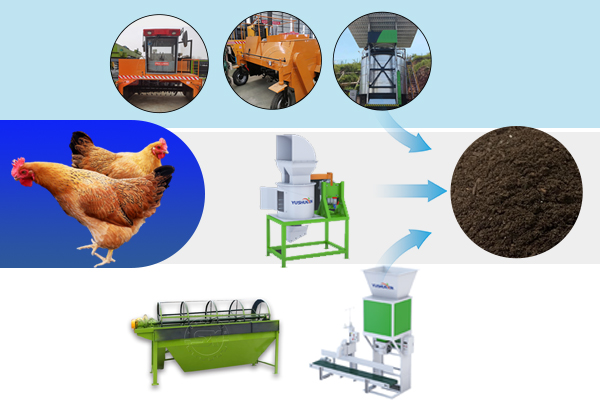
Step 1: Understand Chicken Manure Characteristics
Fresh chicken manure contains high nitrogen content, moisture, pathogens, and ammonia. Direct application can damage crops, which is why fermentation and stabilization are essential.
Before plant design, it is important to evaluate:
Moisture content (typically 60–70%)
Carbon-to-nitrogen ratio
Bedding materials (rice husk, sawdust, straw)
These factors directly influence equipment selection and process configuration.
Step 2: Choose the Right Fermentation Method
Fermentation is the core of chicken manure biofertilizer production. Common options include:
Windrow composting with turners
Groove-type composting systems
Enclosed fermentation tanks for odor control
Each method has different land, labor, and investment requirements. Many modern plants prefer controlled fermentation systems for stable quality and faster composting cycles.
Step 3: Crushing, Mixing, and Moisture Adjustment
After fermentation, composted poultry manure usually requires crushing and screening to achieve uniform particle size. At this stage, additives such as humic acid, beneficial microbes, or crop residues may be blended.
Moisture adjustment is critical, especially if the next step is granulation. Stable moisture ensures smooth operation of organic fertilizer granulating machines and improves pellet strength.
Step 4: Granulation and Shaping Options
For pellet fertilizer, several granulation technologies are commonly used:
Disc granulators (pan pelletizers)
Drum granulation machines
Extrusion pellet mills
The choice depends on target capacity, fertilizer formula, and budget. A well-matched chicken manure fertilizer granulation line improves product appearance, handling, and market value. Click here to get more!
Step 5: Drying, Cooling, and Packaging
Granules usually pass through drying and cooling systems to reduce moisture to safe storage levels. Final screening removes fines, which can be recycled back into the process. Automatic bagging machines complete the production cycle.
Equipment Selection and Technical Support Matter
While many focus on individual machines, successful projects rely on process integration and technical guidance. Experienced biofertilizer equipment manufacturers often provide:
Customized plant layouts
Equipment matching based on manure properties
Commissioning and operator training
This support helps new investors avoid common mistakes and shorten the learning curve.
Final Thoughts
A well-designed chicken manure biofertilizer plant setup transforms poultry waste into a sustainable fertilizer product with strong market demand. By combining proper fermentation technology, reliable equipment, and professional process support, investors can build a stable and scalable organic fertilizer business. If you need a business plan, welcome to visit: https://www.biofertilizerproduction.com/product/solution-for-using-chicken-poop-as-biofertilizer/