How Do You Choose a Double Roller Press Granulator by Raw Material, Capacity, and Granule Size?

A double roller press granulator helps your plant choose the right dry granulation route for compound fertilizer or organic fertilizer. You can compare raw material moisture, hourly capacity, and the finished granule size before selecting a model. The machine presses chicken manure, crop straw, humic acid, and sewage sludge into dense sheets, then breaks the sheets into uniform granules. This dry route fits a fertilizer production line without a dryer or cooler.
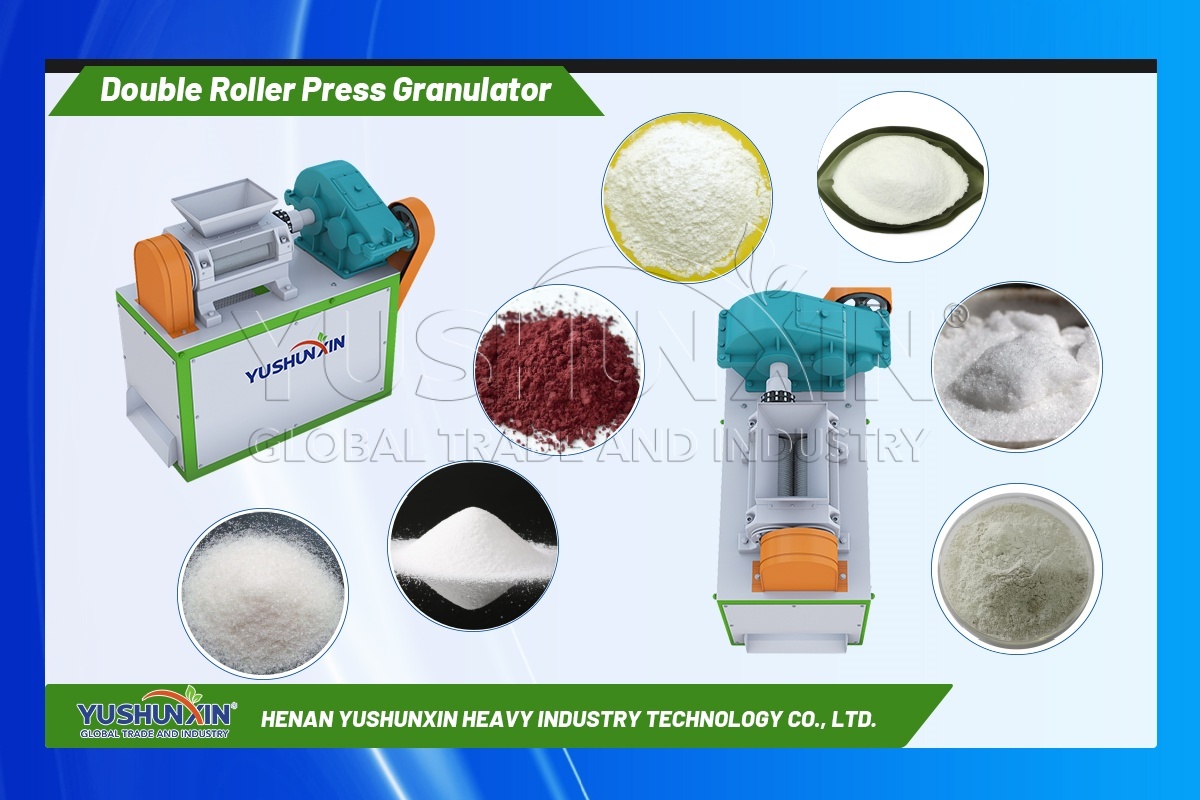
double roller press granulator

double roller press granulator

How does raw material choice affect a double roller press granulator?

Chicken manure and sewage sludge may need dewatering or fermentation before pressing, while crop straw and humic acid may need crushing and blending. Your operators can adjust roller pressure and feed speed when the material changes from soft organic matter to dense mineral powder. A steady feed keeps the powder layer even between the rollers and reduces dust. This control helps the double roller press granulator system produce consistent granules from different raw materials.

How do capacity and granule size guide model selection?

Smaller roller models often support about 1 to 1.5 tons per hour, while larger rollers support 1.5 to 3 tons per hour. Your team can match the machine to the daily output and choose a mold that forms the required particle size. Compound fertilizer granules commonly fall between 4 mm and 5 mm, while special materials may need 8 mm or 10 mm. The double roller press granulator line can also use pillow, cylindrical, or flat-spherical molds for different market needs.

How does dry roller granulation fit a fertilizer manufacturing system?

The dry route removes the dryer and cooler, so your plant uses less energy and occupies less space. You can connect a horizontal mixer, chain crusher, the roller granulator, a screening machine, and a packaging scale into one flow. The screen returns fine powder to the feed, which raises material use. This arrangement supports a fertilizer extrusion technology for both compound and organic fertilizer. You can also review organic fertilizer extrusion technology to see a complete dry granulation line in operation.

How can plant owners compare roller press machines before purchase?

You can compare roller size, motor power, pellet shape, and the type of supporting equipment your project needs. A simple production scheme may use a storage bin instead of an automatic batching system, which lowers the initial budget. Your team can add an automatic batching system later when the plant grows. For background on organic nutrients, you can read the organic fertilizer reference. A fertilizer machinery manufacturer can provide roller specifications and a line drawing for your capacity.

Yushunxin supplies double roller press granulators and supporting equipment for dry granulation plants. If your team has interest in the machine, you can learn more about https://www.extruder-granulator.com/double-roller-extruder-granulator.

Which Roller Press Machine Fits a 1-3 T/H Dry Granulation Plant?

A roller press machine gives a 1-3 t/h dry granulation plant a compact route from powder to finished granules. The machine uses two rollers to press chicken manure, crop straw, humic acid, and sewage sludge into dense sheets, then breaks the sheets into uniform particles. Your plant can run the granulator at normal temperature without a dryer or cooler. This dry method fits a small or medium fertilizer production line that needs simple operation and steady output.

roller press machine

roller press machine

How does a roller press machine form granules from chicken manure, crop straw, humic acid, and sewage sludge?

The feed hopper sends the blended powder between two counter-rotating rollers, and the rollers press the material into a compact sheet. A crushing unit then breaks the sheet into granules, and a screen separates the target size from fine powder. Your operators can adjust roller pressure and feed speed for different material moisture levels. This process works without added water, so the roller press machine system keeps the production flow short and reduces drying cost.

Which roller size and power fit a 1-3 t/h dry granulation plant?

Smaller roller models suit a plant that produces about 1 to 1.5 tons per hour, while larger rollers support 1.5 to 3 tons per hour. Your team can compare roller diameter, motor power, and finished granule size before choosing a model. A machine with a 150 mm or 186 mm roller width often works well for small NPK and organic fertilizer batches. The roller press machine line can produce granules from 3 mm to 15 mm depending on the mold you select.

How does the dry roller process support a fertilizer manufacturing system?

The dry granulation route removes the dryer and cooler, so your plant uses less energy and needs less space. You can connect a horizontal mixer, a chain crusher, the roller granulator, a screening machine, and a packaging scale into one flow. The screen returns fine powder to the feed, which improves material use. This arrangement supports continuous fertilizer extrusion technology for both compound and organic fertilizer. You can review organic fertilizer extrusion technology to see a complete dry granulation line in operation.

How can a small plant choose the right roller press granulator?

You can compare hourly output, roller size, power use, and the particle shape your market requires. A simple individual production scheme uses a storage bin instead of an automatic batching system, which lowers the initial budget. Your team can later add an automatic batching system when the plant grows. For background on organic nutrients, you can read the organic fertilizer reference. A fertilizer machinery manufacturer can provide roller specifications and a line drawing for your capacity.

Yushunxin supplies roller press granulators and supporting equipment for small dry granulation plants. If your team has interest in the machine, you can learn more about https://www.extruder-granulator.com/double-roller-extruder-granulator.

How to Create NPK Dry Granules?

Fertilizers are crucial for enhancing soil fertility and boosting crop yields, and among them, NPK granules stand out due to their balanced supply of nitrogen, phosphorus, and potassium. This post explores the process of creating NPK dry granules, covering the essential steps and considerations to ensure you achieve a high-quality product that promotes healthy plant growth. Whether you’re a commercial fertilizer manufacturer or a farmer looking to tailor your fertilizer blends, understanding the granulation process can significantly improve your gardening or farming results.

Understanding the Granulation Process

At the heart of the NPK dry granulation process lies a piece of equipment known by many names, including a double roller extrusion granulator. This machinery is pivotal for several reasons. It efficiently converts raw materials into compact, easy-to-handle granules without the need for moisture, thus significantly reducing the energy required for drying. Furthermore, the granules produced are of uniform size, aiding in their application and effectiveness as a fertilizer.

Structure of Double Roller Press Granulator

Selecting the Right Raw Materials for Granulation

When undertaking the granulation process, the choice of raw materials is critical. Common inputs include urea, ammonium nitrate, potassium chloride, and monoammonium phosphate, among others. These materials, either used individually or in combination, undergo a transformation within the granulator, emerging as high-quality NPK granules ready for application.

NPK Materials for Double Roller Extruder

Optimizing the Production Line

Beyond the granulator, a streamlined and efficient production line requires several other pieces of equipment. Each plays a unique role in ensuring the quality and efficiency of the final product.

  • Dynamic Batching Machine: Precision is crucial in fertilizer production. A dynamic batching machine allows for the accurate measurement of raw materials, ensuring the correct ratios for optimal plant nutrition.
  • Horizontal Mixer: Uniformity in the mixture is key to effective fertilization. A horizontal mixer ensures that the various raw materials are thoroughly blended before granulation.
  • Vertical Crusher: Size matters in granulation. A vertical crusher reduces large chunks of raw materials to a manageable size, facilitating a smoother granulation process.

Chick here for more details.

Configuring the Ideal Production Line

The configuration of the NPK dry granulation production line hinges on the integration of these machines in a manner that maximizes efficiency and product quality. The dynamic batching machine ensures precise ingredient ratios, the horizontal mixer guarantees a consistent mixture, and the vertical crusher preps the materials for the final step in the granulator. This streamlined process not only enhances productivity but also ensures that the NPK granules meet the highest standards of quality.

Double Roller Granular NPK Fertilizer Production Line

Why Choose Professional Fertilizer Equipment Manufacturers?

Selecting the right equipment is just as crucial as the process itself. Working with professional fertilizer equipment manufacturers ensures access to the latest technology and machinery designed specifically for high-quality NPK granule production. Manufacturers with a proven track record, such as Yushunxin Machinery, offer not only top-tier equipment but also invaluable expertise in configuring the ideal production line tailored to your specific needs.

In conclusion, creating NPK dry granules involves a meticulous selection of raw materials and a carefully configured production line equipped with specialized machinery. From dynamic batching machines to double roller extrusion granulators, each piece of equipment plays a pivotal role in ensuring the efficiency and quality of the final product. By leveraging professional expertise and cutting-edge technology, producers can achieve optimal results in their fertilizer granulation processes. You can visit: https://www.extruder-granulator.com/npk-dry-granulator/

What Matters Most When Choosing A Good Manufacturer Of A Rotary Drum Granulator?

Rotary drum granulators are among the most popular devices for producing granulated materials. You can configure them to produce very specific shapes. They can be used with both low and high concentrations of complex fertilizer. In most cases, you are combining at least three different components. This will include phosphorus, potassium, and of course nitrogen. These are all necessary when you are planting crops of any size. If you have access to a fertilizer rotary drum granulator, and tons of manure, you can produce your own very easily.

Rotary Granulator for Organic Compound Fertilizer Production

Different Types Of Wet Granulators

Perhaps the most popular way to produce pellets for fertilizer is to use a rotary wet granulator process. Compound fertilizers can be made very quickly. When using a disc pan granulator, these machines are known to produce tons of material in the shortest amount of time possible. They utilize the wet granulation method which is one of the easiest to use. However, the production of dry material can also be done. For this, you may need to utilize a double roller press granulator for this purpose. There are also an assortment of other granulator machines, such as organic fertilizer granulators, that are now becoming more popular.

Assessing Them Based Upon Capabilities

The capabilities of these machines really depend on their size, capacity, and the amount of power that they will have access to. For example, when using a disc pelletizer, you can produce finished granules, in designated shapes dependent upon how the unit is made. You may also want to compare the output for a drum pelletizer as opposed to using a standard pan granulator for this purpose. If you have access to pig manure, horse manure, or an abundance of cow manure, you can easily produce tons of this material without having to work very hard at all. You will need to know a little bit about each machine. Consider the capacity, installation angle, and length and diameter of the machines. The power consumption should also factor into the final choice that you make. This assessment process should not take very long at all.

Double Roller Powder Granulator

What Matters Most When You Are Choosing One Of These Granulators?

Most people will agree that a granulator should produce as much material as possible. It is for this reason that you will want to purchase one that has a very high output. Drum pelletizers are perhaps the most efficient of all of these machines. However, you can use any rotary drum granulator to come close to this output. The larger the rotary drum is, the more output you will have as long as you have access to manure that you can use.

The output will always be the top consideration when choosing a rotary drum fertilizer granulator. It does take a little bit of time to do these assessments. However, when choosing any fertilizer pellet machine, be sure that it originates from the very best companies that are manufacturing them today. eventually, you will obtain a reliable unit for a fair price that can help you produce fertilizer pellets for your business.