A roller press machine gives a 1-3 t/h dry granulation plant a compact route from powder to finished granules. The machine uses two rollers to press chicken manure, crop straw, humic acid, and sewage sludge into dense sheets, then breaks the sheets into uniform particles. Your plant can run the granulator at normal temperature without a dryer or cooler. This dry method fits a small or medium fertilizer production line that needs simple operation and steady output.
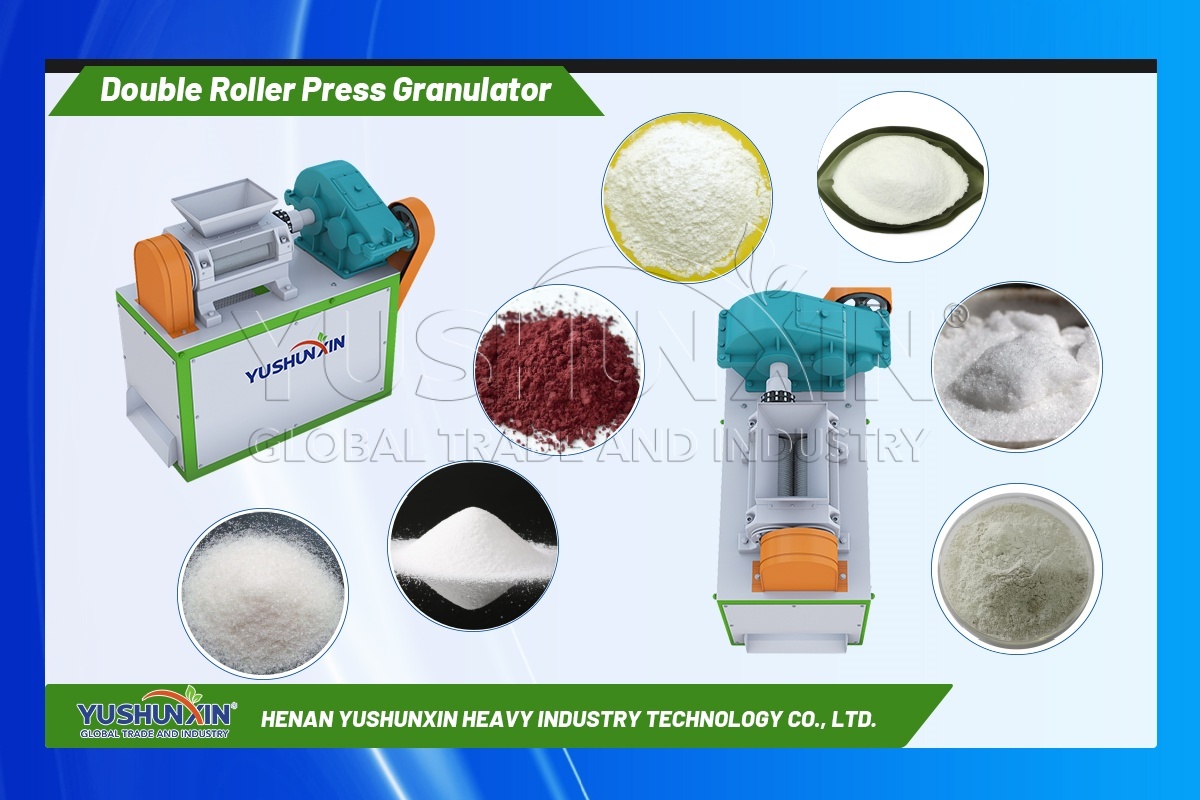
roller press machine
How does a roller press machine form granules from chicken manure, crop straw, humic acid, and sewage sludge?
The feed hopper sends the blended powder between two counter-rotating rollers, and the rollers press the material into a compact sheet. A crushing unit then breaks the sheet into granules, and a screen separates the target size from fine powder. Your operators can adjust roller pressure and feed speed for different material moisture levels. This process works without added water, so the roller press machine system keeps the production flow short and reduces drying cost.
Which roller size and power fit a 1-3 t/h dry granulation plant?
Smaller roller models suit a plant that produces about 1 to 1.5 tons per hour, while larger rollers support 1.5 to 3 tons per hour. Your team can compare roller diameter, motor power, and finished granule size before choosing a model. A machine with a 150 mm or 186 mm roller width often works well for small NPK and organic fertilizer batches. The roller press machine line can produce granules from 3 mm to 15 mm depending on the mold you select.
How does the dry roller process support a fertilizer manufacturing system?
The dry granulation route removes the dryer and cooler, so your plant uses less energy and needs less space. You can connect a horizontal mixer, a chain crusher, the roller granulator, a screening machine, and a packaging scale into one flow. The screen returns fine powder to the feed, which improves material use. This arrangement supports continuous fertilizer extrusion technology for both compound and organic fertilizer. You can review organic fertilizer extrusion technology to see a complete dry granulation line in operation.
How can a small plant choose the right roller press granulator?
You can compare hourly output, roller size, power use, and the particle shape your market requires. A simple individual production scheme uses a storage bin instead of an automatic batching system, which lowers the initial budget. Your team can later add an automatic batching system when the plant grows. For background on organic nutrients, you can read the organic fertilizer reference. A fertilizer machinery manufacturer can provide roller specifications and a line drawing for your capacity.
Yushunxin supplies roller press granulators and supporting equipment for small dry granulation plants. If your team has interest in the machine, you can learn more about https://www.extruder-granulator.com/double-roller-extruder-granulator.