Your choice of npk fertilizer raw material changes how the dry granulation machine handles moisture, pressure, and finished granule strength. Urea absorbs moisture easily, while ammonium sulfate, potassium chloride, and potassium sulfate behave differently under pressure. A double roller granulator can process these materials without water, but your operators must adjust the feed and roller pressure for each formula. This control helps a fertilizer production line make stable NPK granules from dry powder.
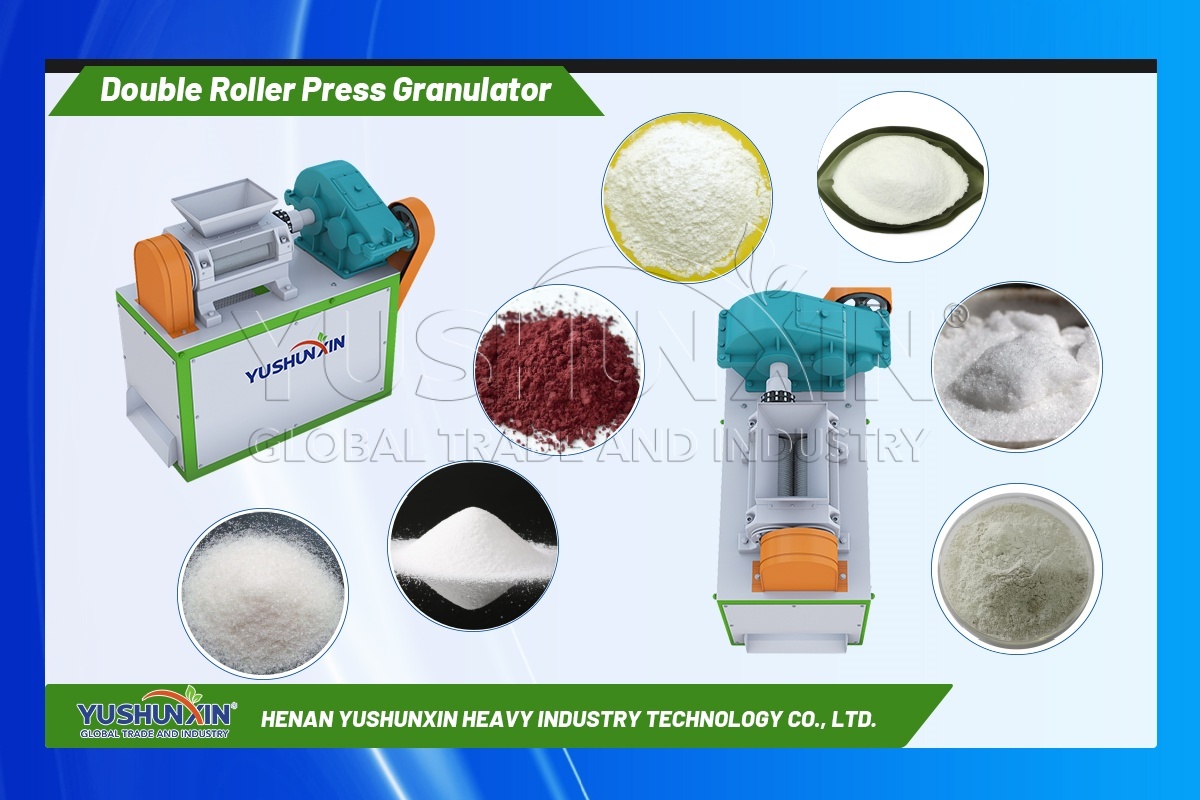
npk fertilizer raw material
How do urea and ammonium sulfate affect NPK dry granulation?
Urea brings nitrogen into the blend, but it can absorb moisture from the air and become sticky. Your team can feed urea at a steady rate and keep the roller pressure moderate so the powder forms a firm sheet without clogging the machine. Ammonium sulfate supplies both nitrogen and sulfur, and it forms granules with good hardness in a dry process. When these two materials combine with potassium sources, the npk fertilizer raw material system needs consistent batching to keep the nutrient ratio stable.
How do potassium chloride and potassium sulfate influence granule quality?
Potassium chloride provides a concentrated potassium source, while potassium sulfate adds potassium and sulfur without chloride. The two materials may flow differently through the hopper, so your operators can test each formula before full production. A steady feeder keeps the powder layer even between the rollers, and the screen returns fine particles to the process. These steps help the npk fertilizer raw material line produce granules with uniform size and sufficient strength for storage and transport.
Which dry granulation settings suit different NPK raw materials?
Roller pressure, gap clearance, and feed speed matter most. Your operators can lower pressure for soft or sticky powders and raise it for dense mineral materials. The granulation machine compacts the powder into a sheet, and a crushing unit forms granules without adding moisture. This fertilizer extrusion technology gives the organic fertilizer extrusion technology a flexible route for both compound and organic fertilizer production. A well-adjusted machine also reduces dust and returns undersized powder to the feed.
How can plant owners build a stable NPK fertilizer manufacturing system?
You can connect a batching machine, a crusher, a mixer, the roller granulator, a screen, and a packaging machine into one flow. The batching machine weighs each raw material, and the mixer blends the NPK components before they enter the granulator. The screen keeps the granule size within range, and the packaging machine fills bags at a steady pace. These machines give your fertilizer processing plant a continuous process from raw powder to finished product. For background on nutrient sources, you can read the organic fertilizer article. A fertilizer machinery manufacturer can provide roller specifications and line layouts for your NPK formula.
Yushunxin can supply roller granulators and supporting machines for NPK dry granulation. If your team has interest in the raw material process, you can learn more about https://www.extruder-granulator.com/raw-materials-for-npk-fertilizer-production.