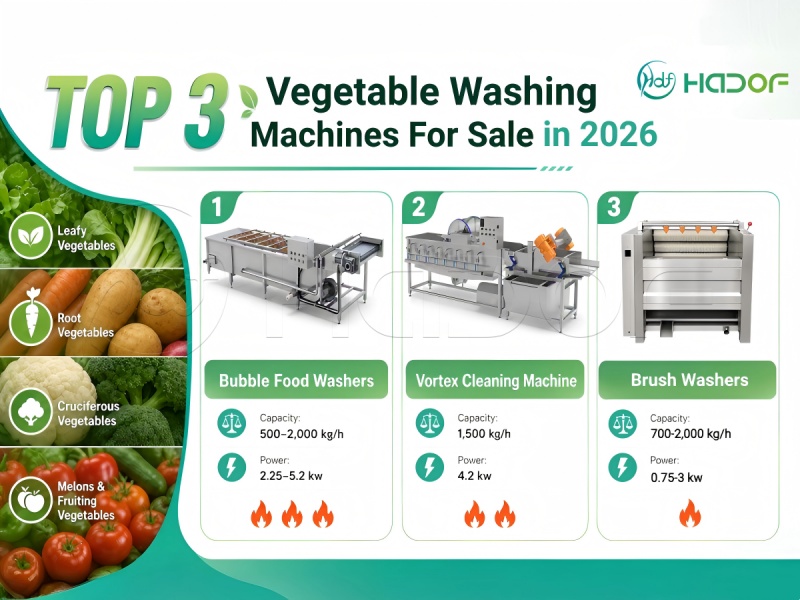
A small salad maker, a fruit processor, or a fresh-cut supplier that still washes produce by hand spends hours on a step a machine can finish steadily. The commercial vegetable washer machine price 2026 covers air bubble, vortex, and brush roller washers, and a small plant picks the one that matches its produce. This article explains how the right washer removes hand washing and lowers the food production cost.
How Does a Washing Machine Replace Manual Labor?
Manual washing assigns workers to fill tubs, agitate the produce, and lift it out, and the work is slow and inconsistent. The air bubble washer for delicate produce cleans leaves and soft fruit gently while the water carries dirt away, so one machine replaces several hands. A small plant that installs a washer reassigns workers to sorting and packing. This change removes the heaviest food handling work from the line.
How Does the Vortex Washer Clean Cut Vegetables?
The vortex washer creates a rotating water flow that reaches sand and debris on cut pieces, so it suits mixed and irregular produce. The vortex vegetable washing machine for a small line deep-cleans while the product keeps its shape. A small plant that processes cut vegetables uses this machine to reduce rework. This deeper clean protects the food manufacturing quality.
How Does the Brush Washer Handle Roots?
The brush roller washer uses rotating brushes and a water spray to clean and peel roots, so potatoes and carrots leave the washer ready for cutting. A small root line uses this machine to remove soil without hand scrubbing. This step cuts the food preparation time for firm produce. A buyer who picks the brush option completes the washing range.
How Should a Small Plant Match the Machine to the Produce?
A small plant picks one washer for its main product, because a leaf line and a root line need different cleaning force. The air bubble washer protects soft leaves, the vortex washer cleans cut pieces, and the brush washer peels roots. A factory that classifies its produce by delicacy and soil keeps the food equipment footprint small.
How Does the Washer Choice Affect Water and Energy Cost?
The washing method also changes the water and power a small plant uses, so the price should include the operating cost rather than only the machine. A bubble washer uses water circulation and gentle bubbles, while a vortex washer uses a rotating flow, and each consumes water at a different rate. A plant that adds a circulating tank and a sedimentation zone reuses water longer and lowers the replacement frequency. This attention to the food processing system keeps the monthly cost low, and a buyer who records water and energy together makes a more accurate food machinery decision.
How Should a Buyer Verify the Washer?
Vegetable washing affects shelf life and safety, so a buyer checks construction and service. You can review the vegetable washer manufacturer before a purchase, and that review shows the stainless build and support. A trial with the plant’s own produce turns the food machinery decision into a dependable saving. A related vortex vegetable washing machine for a cleaning line completes the same processing line.
Conclusion
A commercial vegetable washer machine in 2026 reduces labor in a small plant by matching the washer type to the produce, from gentle bubble cleaning to root brushing. These choices keep the food production line clean and the team small. If you have interests, you can learn more about https://www.hadofps.com/news/top-3-vegetable-washing-machines-for-sale-in-2026/