Designing a fertilizer blending plant layout isn’t only related to placing machines in a building; it’s about creating a smooth, continuous flow of materials that reduces downtime, labor, and waste. A well‑planned layout can directly lower operating costs, improve product consistency, and support future expansion.
1. Clarify Capacity and Product Range
Start by defining your target capacity and product types. Will you focus on simple NPK blends or a wider range with micronutrients and specialty grades? For example, a 30tph bulk blend fertilizer production line requires more robust conveying and batching systems than a small regional plant. Clear capacity targets influence equipment size, building dimensions, and the level of automation you need.
Calculating your expected daily and seasonal throughput also helps you estimate the NPK fertilizer blending plant cost, including equipment, civil works, utilities, and labor. This cost baseline keeps layout decisions realistic and aligned with your budget.
2. Plan a Linear, One‑Way Material Flow
Efficient layouts follow a “straight line” or U‑shaped flow: raw material receiving → storage → batching → blending → screening (if needed) → packaging → finished product storage. The goal is to avoid cross‑traffic and backtracking.
Key considerations:
– Place raw material silos close to the receiving area to minimize unloading time.
– Position batching and weighing systems directly under or next to storage bins.
– Ensure gravity flow where possible to reduce energy use and mechanical complexity.
– Keep blended product moving forward to packaging with minimal transfer points.
A good layout reduces spillage, contamination risk, and forklift traffic, while improving safety and operator visibility.
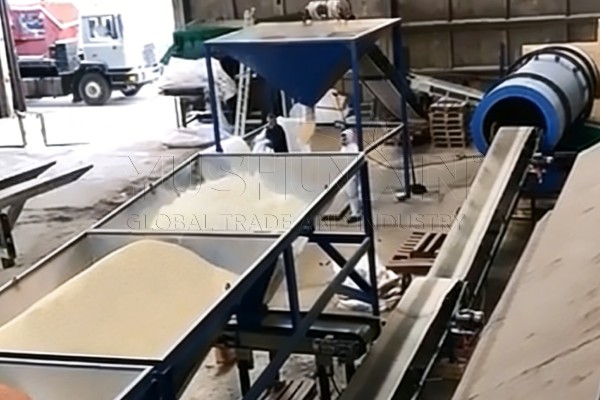
3. Choose the Right Level of Automation
Your layout must match the control strategy. An automatic fertilizer blending plant needs space for control panels, wiring ducts, sensors, and maintenance access around critical equipment. Group control rooms centrally to oversee weighing, blending, and packaging zones.
Automation allows:
– Accurate dosing of each component
– Real‑time recipe changes
– Reduced human error and labor intensity
Plan cable routes and instrument locations early so you’re not forced into awkward equipment positions later.
4. Integrate Safety, Dust Control, and Maintenance Access
Fertilizer is abrasive and often dusty. Include:
– Dust collection points at transfer and dumping stations
– Adequate ventilation and explosion‑relief measures where required
– Clear walkways, guardrails, and emergency exits
Design generous access space around mixers, elevators, and screens for routine inspection and repairs. A cramped layout increases downtime and complicates future upgrades.
5. Design for Expansion and Turnkey Delivery
Even if you start small, reserve space for extra silos, a second blender, or higher‑capacity packaging lines. When working with an engineering supplier on a turnkey fertilizer blending plant project, insist on layout drawings that include expansion options and utility corridors (power, air, dust collection, and data).
If you are still at the planning stage and comparing suppliers, look for a bulk blend fertilizer system for sale that comes with professional layout consulting, process simulation, and on‑site commissioning. This ensures that your investment translates into a plant that runs efficiently from day one, with room to grow as your market expands.