Fine carbon black powder creates dust, wastes material, and complicates storage and transport. A carbon black granulation plant presses or rolls that powder into stable pellets between 3 mm and 10 mm. The process improves material utilization, lowers dust, and gives the powder a regular shape for downstream handling. You can use the following sections to understand the methods, equipment list, and capacity factors behind a reliable carbon black granulation line.
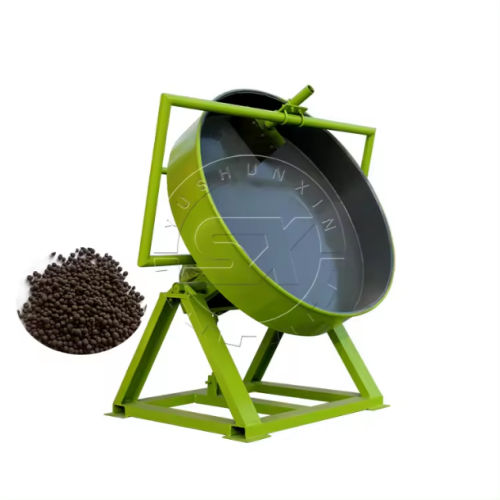
Caption: carbon black granulation plant – fertilizer granulation technology
How does a carbon black granulation plant turn fine powder into stable pellets?
The plant first removes impurities and excess moisture from the carbon black powder. A mixer then blends the powder with a binder or other additives to prepare a uniform feed. A pelletizer shapes the feed into pellets, and for wet granulation a dryer and a cooler remove surface and internal moisture. A sieving machine grades the finished pellets and returns oversized or undersized material for another pass. Each stage in this fertilizer granulation technology adds control over size, purity, and final strength.
Which granulation method suits a carbon black pelletizer in a fertilizer granulation line?
A carbon black pelletizer can use a dry or a wet method. The dry method needs no water or binder, works quickly, and keeps pellet purity high, which suits large-volume production. The wet method adds a liquid binder, gives more control over particle size and shape, and reduces flying dust, but it requires a dryer and a cooler. You should choose the method by product purity, plant space, energy cost, and the target pellet size.
What equipment list supports a carbon black granulation plant in a fertilizer processing plant?
A complete line includes a feed hopper, a mixer, a pelletizer, and, for wet granulation, a dryer and a cooler. A screening machine follows the drying stage and separates qualified pellets from fine powder. A disc granulator machine offers a wet-granulation option with a high ball-forming rate, while a double roller extrusion unit supports dry compaction. Together these fertilizer equipment units form a fertilizer processing plant that converts fine carbon powder into a saleable granular product.
How should a production team evaluate carbon black granulation plant capacity and fertilizer production investment?
Capacity depends on the pelletizer type, the granulation method, and the moisture content of the feed. A dry line needs fewer downstream machines, so the fertilizer production investment stays lower. A wet line adds drying and cooling equipment but gives more uniform pellets and better dust control. You should also include mixing, screening, packaging, and return-material handling in the investment. When you match capacity to daily powder volume, the carbon black granulation process avoids idle equipment and unnecessary operating cost.
Carbon black granulation follows the material behavior described for carbon black, where fine particles become easier to handle after forming. You can review the About Us page for supplier details. For a reference configuration, Yushunxin provides several powder granulator machines for different production scales. If you have interests, you can learn more about https://www.mineralfertilizerproductionsolutions.com/product/carbon-black-granulation-plant