Toward Smarter Chicken Dung Carbon-Based Fertilizer Equipment Solutions

Modern carbon-based fertilizer manufacturing from chicken dung develops rapidly because environmental protection and resource recycling have become key trends. Each factory seeks equipment that improves production efficiency, enhances carbonization quality, and stabilizes granule uniformity. The carbon-based fertilizer production line requires a series of machines that handle chicken manure, carbon powder, and other organic raw materials under strict temperature and moisture control. In this manufacturing process, equipment innovation determines the quality of the final carbon-based fertilizer granules and the cost of the overall procedure. Therefore, understanding what equipment innovations exist in chicken dung carbon-based fertilizer production helps enterprises evaluate machinery performance and optimize investment strategies.


Raw Materials for Carbon-Based Fertilizer Production: What Materials Work with Chicken Dung Best?

Raw materials for carbon-based fertilizer manufacturing often combine chicken manure with other carbon-rich biomass materials. Chicken dung provides abundant nitrogen and organic matter, while straw powder, rice husk, sawdust, and crop stems supply carbon content. Some producers also add powdered biochar or carbonized wood particles to balance the carbon–nitrogen ratio. During the fertilizer preparation procedure, these raw materials mix into a uniform powdery structure through a crushing machine or carbon fertilizer grinder machine for sale. Proper raw material selection and ratio adjustment ensure that carbon-based fertilizer particles maintain stable texture and nutrient composition. In actual production, farmers and industrial producers often choose materials that are locally available to reduce cost and transportation distance, while maintaining consistency in powder fineness and moisture content. This combination forms the foundation for high-quality carbon-based fertilizer granulation.
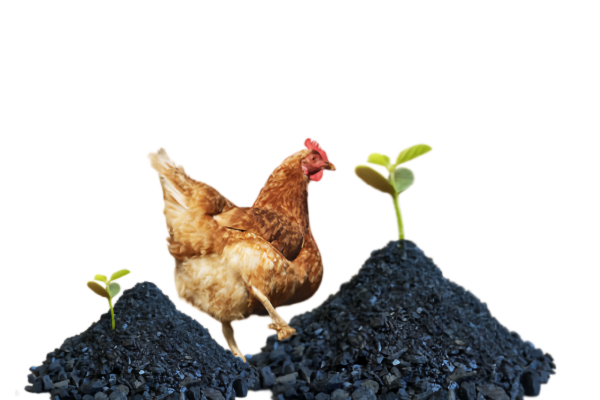

Key Equipment and Technological Innovations: How Do Machines Transform Chicken Dung into Carbon-Based Fertilizer Granules?

The transformation of chicken manure into carbon-based fertilizer granules relies on advanced equipment design and continuous process refinement. The carbonization equipment, such as a carbonization furnace, converts dry chicken dung and auxiliary biomass into carbon-rich powder material. After carbonization, a crushing machine refines the carbonized chicken dung into fine powder for subsequent granulation. During the powder granulating procedure, different types of granulators, including disc granulator, drum granulator, double roller extrusion granulator, and flat die granulator, operate to form uniform carbon-based fertilizer pellets or balls. The granulating machine design now focuses on energy efficiency, adjustable particle size, and better adhesion between carbon powder and organic binder materials.

In addition, modern carbon-based fertilizer production lines introduce automated compost machines that pre-treat raw chicken dung and regulate fermentation temperature. Drying machine systems remove excess moisture after granulation, ensuring that powder-to-pellet conversion achieves stable hardness and long storage life. Finally, the automatic packing machine completes the process, helping manufacturers maintain consistent production flow and clean packaging environments. These technological innovations not only increase productivity but also minimize odor emissions and nutrient loss during the chicken dung processing procedure.

compost fertilizer granulation machines

Integration and Efficiency: How Can Equipment Coordination Improve Carbon-Based Fertilizer Production?

Efficient coordination among machines determines the performance of a carbon-based fertilizer manufacturing line. When the carbonization equipment, crushing machinery, granulator, and drying systems operate under synchronized control, the chicken manure-based carbon fertilizer obtains uniform granule structure and balanced nutrient release characteristics. Each unit in the production procedure complements the others, from raw material preparation to powdered material mixing and final pellet packaging. The integration of digital control systems now allows operators to monitor temperature, carbonization rate, and granulating pressure, which enhances product quality consistency.

In modern practice, some equipment manufacturers develop modular production lines, enabling you or your enterprise to adjust capacity or replace single machines without interrupting the overall manufacturing process. This modular approach supports flexible chicken dung carbon fertilizer production for various market scales. Through improved design and sensor-based automation, the line achieves lower energy consumption and higher yield, proving that innovation in carbon-based fertilizer machinery continues to evolve along with environmental policies and circular economy goals.


Conclusion

Carbon-based fertilizer manufacturing from chicken dung demonstrates how innovative machinery transforms agricultural waste into valuable granules. Continuous improvement in carbonization, crushing, granulating, drying, and packaging equipment ensures efficient resource utilization and stable product performance. For enterprises seeking professional solutions in carbon-based fertilizer production, collaboration with a professional fertilizer equipment manufacturer—Yushunxin offers access to advanced granulation machinery and integrated production systems that enhance both sustainability and profitability. You can visit: https://www.charbasedfertilizermachine.com/product/chicken-dung-and-biochar-as-fertilizer/

Exploring the Environmental Advantages of Carbon-Based Fertilizers Made from Poultry Manure

Modern agriculture faces growing challenges in waste management and soil degradation. Chicken manure, also known as bird dung, represents a valuable raw material for sustainable fertilizer manufacturing. When you use carbon-based fertilizer produced from chicken manure, the process not only transforms waste into a beneficial resource but also reduces environmental pressure. This type of fertilizer production combines carbonization, granulation, and drying procedures, forming a complete chain that supports circular economy principles. Compared with chemical fertilizer, carbon-based fertilizer made from chicken dung offers better soil improvement capacity, higher organic carbon content, and lower pollution emissions. Therefore, understanding the procedure and equipment used in chicken manure carbon fertilizer production helps you recognize its environmental value and technical potential.


Raw Material Selection: What Kinds of Organic Feedstock Suit Carbon-Based Fertilizer Production?

The production of carbon-based fertilizer begins with suitable raw materials. Chicken manure, as a primary resource, provides abundant organic matter and nitrogen. In addition to poultry feces, other materials such as rice husks, corn stalks, peanut shells, and sawdust can mix with chicken dung to obtain a balanced carbon-to-nitrogen ratio. During the biomass preparation process, producers often use a crushing machine or carbon fertilizer grinder machine for sale to turn raw materials into powdery or powdered particles. The powder form improves carbonization efficiency and helps the later granulation procedure. Each raw material contributes differently: chicken manure adds nutrients, while crop residues increase the carbon content and promote better biochar formation. This combination reduces odor, minimizes pathogens, and enhances the overall stability of the carbon fertilizer product. Through rational selection and proper mixing, every batch of chicken-based carbon fertilizer achieves consistent quality and environmental performance.


Processing Procedure: How Does the Carbon-Based Fertilizer Production Line Reduce Environmental Impact?

The carbon-based fertilizer production line includes several interconnected processes: composting, carbonization, crushing, granulating, drying, and packing. In the compost stage, producers use compost machines to decompose raw chicken dung, lowering moisture and eliminating harmful microorganisms. The carbonization equipment, often a furnace or pyrolysis chamber, converts organic matter into powdered carbon material under high temperature. This step locks carbon in a stable form and decreases greenhouse gas emissions compared with direct manure disposal. After carbonization, a crushing machine grinds the carbonized chicken manure into fine powder, preparing it for the granulation process.

The granulation procedure employs various pelletizers or granulators, such as disc granulator, double roller extrusion granulator, drum granulator, or new type organic fertilizer granulator. These machines transform powdery materials into uniform granules, pellets, or balls. The granule size affects nutrient release rate and fertilizer application efficiency. The drying machine then removes excess moisture to ensure storage stability, while the packing machine completes the final step of the production. Throughout this process, energy recovery systems may reuse heat from carbonization, thus reducing energy consumption and minimizing emissions. Each machine in this fertilizer processing line contributes to environmental protection by converting poultry waste into a valuable carbon-based product rather than letting it decompose uncontrolled.

granulator machine


Environmental Significance: Why Does Chicken Manure Carbon Fertilizer Support Sustainability?

The use of chicken manure in carbon-based fertilizer preparation provides multiple environmental advantages. First, it cuts down on the volume of poultry waste that might otherwise pollute soil and water sources. Second, it produces a carbon-rich material that enhances soil structure, increases water retention, and improves microbial diversity. The carbon component also stabilizes nutrients, reducing nitrogen loss and greenhouse gas release during fertilizer application. Moreover, the carbon-based fertilizer manufacturing procedure creates fewer odors and pathogens compared with traditional fresh manure use.

In addition, the granulation and pelletizing steps make fertilizer particles more uniform and easier to transport and apply, decreasing waste and preventing nutrient runoff. The overall production cycle follows a low-emission model that supports circular resource utilization. By integrating advanced processing equipment and energy-saving furnace technology, producers achieve both environmental protection and economic value. As a result, carbon-based fertilizer from chicken dung represents a bridge between waste recycling and sustainable soil management.


Conclusion

In summary, carbon-based fertilizer manufacturing from chicken manure transforms agricultural waste into a stable and eco-friendly product. The complete production process—from composting and carbonization to granulation, drying, and packaging—demonstrates how technology and sustainability intersect. Each step minimizes pollution, conserves resources, and enhances fertilizer quality. For clients who seek efficient solutions and reliable machinery in this field, a professional fertilizer equipment manufacturer—Yushunxin—offers complete carbon-based fertilizer production lines, including carbonization equipment, granulators, dryers, and related machines, to help achieve cleaner production and long-term environmental benefits. You can visit: https://www.charbasedfertilizermachine.com/product/chicken-dung-and-biochar-as-fertilizer/

What Machinery Is Essential for Pelletizing Powdery Chicken Manure?

The processing of powdery chicken manure into carbon-based fertilizer pellets represents an essential step in sustainable waste management. As poultry farms generate large volumes of bird dung and chicken droppings, the transformation from powder manure to stable granules ensures higher nutrient efficiency and safer storage. Many fertilizer production plants integrate advanced pelletizing machinery to convert loose carbon-rich powder into uniform particles. In such a production procedure, the combination of crushing, mixing, granulating, and carbonization equipment guarantees product stability and economic value.

The pelletizing process not only stabilizes organic matter but also optimizes the nutrient availability of chicken manure carbon fertilizer. Through controlled granulation, the powdery materials acquire uniform particle size and better physical strength. Therefore, any fertilizer manufacturer focusing on carbon-based fertilizer production needs specialized machines to achieve efficient granule formation, moisture control, and nutrient preservation.

Raw Material Selection for Carbon-Based Fertilizer Production from Chicken Manure

Chicken manure serves as the primary organic material for producing carbon-based fertilizers. However, farms often mix other carbon-rich residues to improve granule quality. Suitable raw materials include poultry dung, bird manure powder, rice husk, coconut shell powder, straw powder, and sawdust powder. These carbon materials can improve both the porosity and carbon content of the final fertilizer pellets.

During the preparation process, the manure undergoes uniform composting to reduce moisture and pathogens. The compost machine plays a crucial role in this phase, ensuring complete fermentation and odor reduction. The addition of biochar, peat, and crop residues enhances the carbon-based feature of the fertilizer, which increases soil fertility and water retention when applied. The correct balance between nitrogen-rich chicken manure and carbon-rich biomass leads to high-quality powder suitable for granulation. As a result, the selection and pretreatment of raw materials directly determine the performance of the pelletizing procedure.

Chicken manure fertilizer production

Core Machinery in the Powdery Chicken Manure Pelletizing Process

The carbon-based fertilizer manufacturing line usually consists of several coordinated machines. The crushing machine, also called a carbon fertilizer grinder machine, reduces large dried manure lumps into fine powder. This step guarantees even feeding and uniform granule formation. The mixing equipment then blends the powdered chicken manure with auxiliary carbon materials to maintain consistent composition.

The most critical stage involves the granulator or pelletizer, which determines the efficiency of powder-to-pellet transformation. Several types of granulating machines exist, such as the disc granulator, flat die pelletizer, double roller extrusion granulator, drum granulator, and new type organic fertilizer granulator. Each granulator shapes the powdery materials into regular spherical or cylindrical granules under controlled moisture and temperature conditions. The drying machine then removes excess water, while the carbonization furnace converts part of the organic matter into stable carbon-based compounds. Finally, the packing machine completes the production procedure by sealing the finished pellets for storage and transportation.

The harmonious operation of these machines ensures a continuous and clean carbon-based fertilizer production line. Every piece of equipment plays a unique role, from powder preparation to pellet forming, improving the physical strength and nutrient stability of the final product.

granulator machine

Summary

A standardized production system for carbon-based fertilizer depends on the rational selection and combination of machinery. The entire process converts raw chicken dung powder into durable, nutrient-rich pellets through crushing, mixing, granulating, drying, carbonizing, and packing steps. Each step enhances the quality of the final carbon fertilizer granules and reduces material losses.

In conclusion, producers who plan to invest in powdery chicken manure pelletizing technology should focus on equipment reliability, energy efficiency, and granule uniformity. Professional guidance and integrated solutions ensure smooth operation and consistent product quality. A professional fertilizer equipment manufacturer—Yushunxin—provides comprehensive carbon-based fertilizer production machinery, including high-performance compost machines, efficient granulators, advanced carbonization furnaces, and intelligent packing systems. Through precise design and reliable manufacturing, such equipment enables clients to achieve efficient chicken manure pellet production and long-term economic sustainability. You can visit: https://www.charbasedfertilizermachine.com/product/chicken-dung-and-biochar-as-fertilizer/

Latest Technological Developments in Granulation for Carbonized Fertilizers Made from Chicken Manure

In recent years, the demand for carbon-based fertilizer production from chicken manure has increased rapidly as more producers aim to transform agricultural waste into high-value, eco-friendly products. The carbonization and granulation process plays a decisive role in turning chicken dung or bird manure into stable, nutrient-rich carbon-based fertilizer granules. Modern fertilizer production lines now integrate smart granulation machinery, automatic control systems, and energy-saving designs to enhance efficiency and product quality. Understanding the raw materials, production procedures, and advanced granulation technologies helps enterprises achieve consistent performance and sustainable fertilizer manufacturing.


What Raw Materials Support Carbon-Based Fertilizer Production from Chicken Manure?

Enterprises usually prepare multiple raw materials for carbon-based fertilizer production from chicken manure. Chicken manure provides organic matter and nitrogen, while other materials such as rice husk, sawdust, straw powder, biochar, peat, and powdered crop residues offer carbon sources and improve texture. During the preparation process, the moisture content and carbon–nitrogen ratio must remain stable to ensure successful composting and carbonization. Some producers also blend small portions of micro-minerals, humic powder, or wood chip residues to optimize the granule structure and nutrient balance. When treated through a controlled carbonization furnace, these raw materials convert into fine carbonized powder suitable for later granulation. The combination of chicken waste and carbon-rich materials effectively enhances fertilizer value and reduces odor emissions, forming a solid foundation for high-quality granule production.


How Do Modern Machines Improve the Chicken Manure Processing Procedure?

The chicken manure processing procedure involves several critical stages: composting, crushing, carbonization, granulating, drying, and packing. Each stage requires specialized fertilizer manufacturing equipment to maintain uniformity and reduce energy loss. For example, a compost machine accelerates the fermentation process and ensures the chicken dung decomposes thoroughly. After carbonization in a furnace, the resulting carbonized powder enters a crushing machine or carbon fertilizer grinder machine for fine size adjustment. The powdered material then moves to a granulator. Current granulation technologies include disc granulators, double roller extrusion granulators, drum granulators, flat die granulators, and new type organic fertilizer granulators. Each granulator type supports different particle sizes, moisture contents, and production capacities. Modern granulators feature automatic feeding systems, variable-speed control, and anti-corrosion materials to improve durability and pellet shape. The pelletizer or ball-making machine ensures that the powdery chicken manure-based materials transform into compact granules or pellets with uniform density. Finally, a drying machine and packing machine complete the final steps, stabilizing the carbon-based fertilizer for storage and transportation.

granulator machine


What Are the Latest Trends in Carbon-Based Fertilizer Granulation Technology?

Recent innovations in granulation technology focus on improving automation, energy efficiency, and environmental performance. Many fertilizer production lines now apply intelligent control systems to monitor temperature, humidity, and granule size in real time. Advanced pellet making machines use improved mixing blades and stirring mechanisms to prevent material adhesion and ensure even granulation. The integration of carbonization equipment with granulating machinery also shortens the production cycle. In addition, rotary drum granulators and double roller extrusion granulators allow the operator to handle raw materials with different moisture levels, reducing waste. Some manufacturers develop modular production lines that combine composting, carbonization, and granulation units to achieve continuous operation. The trend toward low-dust and low-noise fertilizer manufacturing strengthens environmental protection and worker safety standards. As technology evolves, carbon-based fertilizer producers gain more flexibility to adjust their production parameters and deliver consistent, high-grade carbon fertilizer granules suitable for various soil applications.


Conclusion

The development of new carbon-based fertilizer granulation technology enables enterprises to transform chicken manure and bird dung into valuable, environmentally responsible products. Through proper raw material selection, optimized carbonization and granulating procedures, and efficient use of machines such as carbonization furnaces, crushing machines, and granulators, producers can achieve reliable production performance. The combination of automation, precision control, and integrated equipment design will continue to drive the fertilizer manufacturing industry forward. A professional fertilizer equipment manufacturer—Yushunxin—provides complete solutions for carbon-based fertilizer production from chicken manure, supporting customers in achieving efficient, sustainable, and profitable operations. You can visit: https://www.charbasedfertilizermachine.com/product/chicken-dung-and-biochar-as-fertilizer/

How Can Powdered Chicken Manure Be Turned into Carbon-Based Fertilizer Pellets?

When considering modern fertilizer production, many clients look for efficient ways to convert powdered chicken manure into high-value carbon-based fertilizer pellets. This process not only adds value to poultry waste but also promotes sustainable resource utilization. Understanding the essential raw materials, the specialized equipment involved, and the unique production procedure is crucial for anyone planning to invest in or optimize a carbon-based fertilizer manufacturing line.


What Raw Materials Are Suitable for Carbon-Based Fertilizer Production from Chicken Manure?

Selecting the right raw materials forms the foundation for efficient carbon-based fertilizer pellet production. Powdery chicken manure, often referred to as bird dung or poultry dung, serves as the primary organic input. This powdered chicken manure provides a rich source of nutrients and organic matter, but production usually benefits from combining it with supplementary carbon-rich materials.

Suitable carbon additives include powdered crop straw, sawdust, rice husks, corncobs, or even biochar. Some facilities also integrate other livestock manures, such as cow dung or sheep manure, to optimize the nutrient balance and improve granulation performance. These raw materials, when blended with powdered poultry waste, result in a strong precursor mix for carbon-based fertilizer granulating. The mixture’s moisture content, particle size, and carbon-to-nitrogen ratio all influence the efficiency of subsequent carbonization and pelletizing steps. Careful selection and preparation of these materials can directly affect the performance, hardness, and uniformity of the final fertilizer granules.


Which Machines Support the Powdered Chicken Manure to Carbon-Based Fertilizer Pellet Process?

Granule and pellet manufacturing from powdered poultry manure requires a carefully engineered production line. The process typically starts with pre-treatment equipment such as a compost machine, which accelerates the organic matter fermentation and stabilizes the powdered chicken dung. After composting, a crushing machine, for example, a carbon fertilizer grinder machine, reduces the particle size of the raw material mixture, ensuring a consistent powder for further processing.

The carbonization stage often utilizes a carbonization furnace or similar equipment. This carbonization equipment converts the organic powder blend into a carbon-rich material, providing the essential base for carbon-based fertilizer pelletizing. The next stage involves a granulator or pelletizer, such as a disc granulator, flat die granulator, or double roller extrusion granulator. These machines shape the powdery carbon material into uniform fertilizer pellets, granules, or particles, improving their transport, storage, and application characteristics.

Additional equipment, like a drying machine, reduces the moisture of the granulated fertilizer, while a packing machine simplifies storage and logistics. Each step in the process, from composting and crushing to carbonization and granulation, requires specialized machinery tailored for powdered chicken manure and carbon-based fertilizer production.

biofertilizer granulators.

How Does the Whole Chicken Manure Carbon-Based Fertilizer Pellet Production Procedure Work?

The chicken manure powder to carbon-based pellet manufacturing process follows a systematic procedure. Initially, workers collect and powder the bird manure, often blending it with other carbon-rich materials such as sawdust or straw. After adjusting the moisture content and thoroughly mixing the ingredients, the mixture enters the composting phase, where a compost machine accelerates organic matter decomposition.

Once composted, the material moves to a crushing machine, which turns the composted mass into fine powder, facilitating uniform carbonization. The carbonization equipment then heats this powder under controlled oxygen-limited conditions, creating a carbon-rich base. The resulting carbonized powder enters the granulator or pelletizer—selected according to production requirements and desired pellet shape. As the granulating machine forms the powder into granules or pellets, operators monitor parameters like moisture and temperature to ensure pellet quality. A drying machine further reduces humidity, while a packing machine prepares the carbon-based fertilizer pellets for distribution.

Each step in this process ensures the transformation of simple powdered chicken manure into high-quality carbon-based fertilizer granules. The systematic approach maximizes resource efficiency and product value.


Conclusion

Efficient conversion of powdery chicken manure into carbon-based fertilizer granules relies on selecting appropriate raw materials, utilizing specialized fertilizer production machinery, and carefully managing the manufacturing process. By combining these elements, companies can create marketable fertilizer pellets from poultry waste, supporting both environmental and economic goals. For those seeking advanced equipment such as granulators, carbonization furnaces, and complete fertilizer pellet production lines, a professional fertilizer equipment manufacturer like Yushunxin delivers tailored solutions for every stage of chicken manure-based carbon fertilizer pellet production. You can visit: https://www.charbasedfertilizermachine.com/product/chicken-dung-and-biochar-as-fertilizer/

How Can Chicken Manure Be Transformed into Carbon-Based Fertilizer Using Advanced Equipment?

Transforming chicken manure into carbon-based fertilizer is an innovative process that not only addresses waste management but also contributes to sustainable agriculture. Utilizing advanced equipment, this procedure converts nutrient-rich bird dung into valuable organic fertilizer. Understanding the processing steps and machinery involved is essential for efficient production of high-quality carbon-based fertilizer.

What Raw Materials Are Suitable for Producing Carbon-Based Fertilizer from Chicken Manure?

Chicken manure serves as an excellent raw material for carbon-based fertilizer due to its high nutrient content. In addition to chicken dung, materials like straw, sawdust, and other agricultural residues can be incorporated to enhance the carbon ratio. Combining these materials results in a richer, more balanced fertilizer. Proper selection and preparation of these raw materials are crucial for effective production and for meeting specific soil and crop requirements.

How Does Advanced Equipment Process Chicken Manure into Powdery Carbon-Based Fertilizer?

The transformation begins with carbonization equipment, such as a specialized furnace, where chicken manure undergoes pyrolysis to become biochar. This charred material retains the original nutrients while gaining enhanced carbon content. Subsequently, a crushing machine, like a carbon fertilizer grinder machine for sale, grinds the biochar into a fine, powdery substance. This powdered form is essential for uniform granulation, ensuring that the final fertilizer product has consistent particle size and composition.

Which Granulation Machines Are Ideal for Pelletizing Carbon-Based Fertilizer?

Granulating the powdered fertilizer enhances its usability and effectiveness. Various granulators are suitable for this task, including disc granulators, flat die granulators for char-based fertilizer, and double roller extrusion granulators. These machines facilitate the pelletizing process, transforming powdery materials into granules or pellets. The granulation not only improves the physical properties of the fertilizer but also aids in controlled nutrient release, benefiting crop growth and soil health.

Why Choose Professional Equipment Manufacturers for Carbon-Based Fertilizer Production?

Selecting advanced machinery from reputable equipment manufacturers is vital for efficient production. Professional manufacturers offer a range of specialized machines, such as compost machines, drying machines, and packing machines, tailored for carbon-based fertilizer production. Their expertise ensures that each piece of equipment integrates seamlessly into the production line, maximizing efficiency and product quality. Investing in high-quality machinery reduces maintenance costs and enhances overall operational effectiveness.

Conclusion

Converting chicken manure into carbon-based fertilizer using advanced equipment is a sustainable solution that benefits both agriculture and the environment. By utilizing appropriate raw materials and state-of-the-art machinery, producers can create high-quality fertilizer that promotes soil fertility and plant growth. Professional equipment manufacturers like Yushunxin provide the necessary technology and support to facilitate this transformation, offering comprehensive solutions for efficient fertilizer production. Embracing these advanced methods positions producers at the forefront of sustainable agricultural practices. You can visit: https://www.charbasedfertilizermachine.com/product/disc-granulator-machine/

How to Optimize Disc Granulation for Superior Carbon-Based Fertilizer Output?

In the pursuit of enhanced agricultural productivity and sustainability, carbon-based fertilizers have become increasingly significant. Optimizing the disc granulation process is essential for producing superior carbon-enriched fertilizer granules. Understanding the key factors involved in granule production can lead to improved efficiency and quality in fertilizer manufacturing.

What Raw Materials Are Ideal for Carbon-Based Fertilizer Production?

Selecting the appropriate raw materials is crucial for the production of high-quality carbon-based fertilizer pellets. Organic wastes such as agricultural residues, straw, sawdust, and animal manures are rich in carbon content and serve as excellent base materials. Additionally, biochar produced from carbonization equipment like biomass carbonizing furnaces enhances the carbon density of the fertilizer. Incorporating these materials not only recycles waste but also enriches the soil when applied as fertilizer.

How Does Equipment Choice Affect Granule Quality in Fertilizer Manufacturing?

The choice of granulation equipment significantly influences the quality of the fertilizer granules. Utilizing a pan granulator or a disc pelletizer ensures uniform particle size and optimal granule hardness. These machines offer adjustable tilt angles and rotational speeds, allowing precise control over the pellet-making process. Advanced disc pelletizing equipment enhances the roundness and smoothness of the granules, which is essential for efficient application and nutrient release in the soil.

Disc granulating machine for sale

Which Factors Influence the Efficiency of the Disc Granulation Process?

Several factors impact the efficiency of disc granulating during carbon-based fertilizer production. Moisture content of the raw materials must be carefully controlled, typically maintained between 30% to 35%, to facilitate proper granule formation. The speed and angle of the pan granulator determine the rolling motion necessary for pellet formation. Consistent feeding rates and the use of appropriate binders also play vital roles in ensuring uniform granule size and preventing agglomeration.

What Additional Equipment Enhances Carbon-Based Fertilizer Production?

Integrating supplementary equipment can significantly improve the overall fertilizer production process. A crushing machine ensures raw materials are reduced to the optimal size before granulation. Compost turners accelerate the decomposition of organic matter, enhancing the nutrient content of the fertilizer. Drying machines are essential for reducing moisture content in the final product, prolonging shelf life and preventing caking. Packaging equipment streamlines the final step, ensuring the granules are securely packed for distribution.

Conclusion

Optimizing disc granulation is fundamental to producing superior carbon-based fertilizer granules. By carefully selecting high-carbon raw materials and utilizing advanced pelletizing machinery, manufacturers can enhance both the quality and efficiency of fertilizer production. Considering factors such as equipment choice and process parameters is essential for success. Collaborating with a professional fertilizer equipment manufacturer like Yushunxin provides access to cutting-edge technology and expertise, ensuring superior outcomes in carbon-based fertilizer manufacturing. You can visit: https://www.charbasedfertilizermachine.com/product/disc-granulator-machine/