Modern carbon-based fertilizer manufacturing from chicken dung develops rapidly because environmental protection and resource recycling have become key trends. Each factory seeks equipment that improves production efficiency, enhances carbonization quality, and stabilizes granule uniformity. The carbon-based fertilizer production line requires a series of machines that handle chicken manure, carbon powder, and other organic raw materials under strict temperature and moisture control. In this manufacturing process, equipment innovation determines the quality of the final carbon-based fertilizer granules and the cost of the overall procedure. Therefore, understanding what equipment innovations exist in chicken dung carbon-based fertilizer production helps enterprises evaluate machinery performance and optimize investment strategies.
Raw Materials for Carbon-Based Fertilizer Production: What Materials Work with Chicken Dung Best?
Raw materials for carbon-based fertilizer manufacturing often combine chicken manure with other carbon-rich biomass materials. Chicken dung provides abundant nitrogen and organic matter, while straw powder, rice husk, sawdust, and crop stems supply carbon content. Some producers also add powdered biochar or carbonized wood particles to balance the carbon–nitrogen ratio. During the fertilizer preparation procedure, these raw materials mix into a uniform powdery structure through a crushing machine or carbon fertilizer grinder machine for sale. Proper raw material selection and ratio adjustment ensure that carbon-based fertilizer particles maintain stable texture and nutrient composition. In actual production, farmers and industrial producers often choose materials that are locally available to reduce cost and transportation distance, while maintaining consistency in powder fineness and moisture content. This combination forms the foundation for high-quality carbon-based fertilizer granulation.
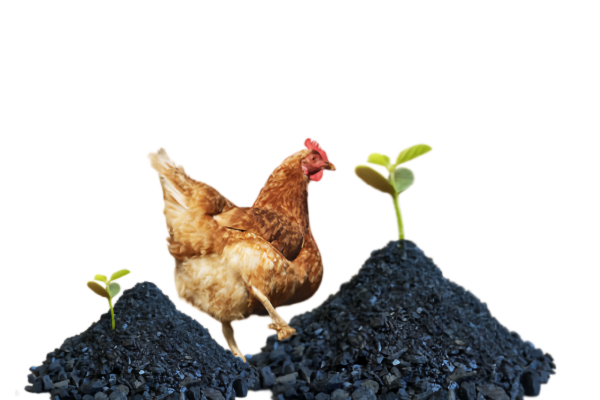
Key Equipment and Technological Innovations: How Do Machines Transform Chicken Dung into Carbon-Based Fertilizer Granules?
The transformation of chicken manure into carbon-based fertilizer granules relies on advanced equipment design and continuous process refinement. The carbonization equipment, such as a carbonization furnace, converts dry chicken dung and auxiliary biomass into carbon-rich powder material. After carbonization, a crushing machine refines the carbonized chicken dung into fine powder for subsequent granulation. During the powder granulating procedure, different types of granulators, including disc granulator, drum granulator, double roller extrusion granulator, and flat die granulator, operate to form uniform carbon-based fertilizer pellets or balls. The granulating machine design now focuses on energy efficiency, adjustable particle size, and better adhesion between carbon powder and organic binder materials.
In addition, modern carbon-based fertilizer production lines introduce automated compost machines that pre-treat raw chicken dung and regulate fermentation temperature. Drying machine systems remove excess moisture after granulation, ensuring that powder-to-pellet conversion achieves stable hardness and long storage life. Finally, the automatic packing machine completes the process, helping manufacturers maintain consistent production flow and clean packaging environments. These technological innovations not only increase productivity but also minimize odor emissions and nutrient loss during the chicken dung processing procedure.

Integration and Efficiency: How Can Equipment Coordination Improve Carbon-Based Fertilizer Production?
Efficient coordination among machines determines the performance of a carbon-based fertilizer manufacturing line. When the carbonization equipment, crushing machinery, granulator, and drying systems operate under synchronized control, the chicken manure-based carbon fertilizer obtains uniform granule structure and balanced nutrient release characteristics. Each unit in the production procedure complements the others, from raw material preparation to powdered material mixing and final pellet packaging. The integration of digital control systems now allows operators to monitor temperature, carbonization rate, and granulating pressure, which enhances product quality consistency.
In modern practice, some equipment manufacturers develop modular production lines, enabling you or your enterprise to adjust capacity or replace single machines without interrupting the overall manufacturing process. This modular approach supports flexible chicken dung carbon fertilizer production for various market scales. Through improved design and sensor-based automation, the line achieves lower energy consumption and higher yield, proving that innovation in carbon-based fertilizer machinery continues to evolve along with environmental policies and circular economy goals.
Conclusion
Carbon-based fertilizer manufacturing from chicken dung demonstrates how innovative machinery transforms agricultural waste into valuable granules. Continuous improvement in carbonization, crushing, granulating, drying, and packaging equipment ensures efficient resource utilization and stable product performance. For enterprises seeking professional solutions in carbon-based fertilizer production, collaboration with a professional fertilizer equipment manufacturer—Yushunxin offers access to advanced granulation machinery and integrated production systems that enhance both sustainability and profitability. You can visit: https://www.charbasedfertilizermachine.com/product/chicken-dung-and-biochar-as-fertilizer/