Modern agriculture faces growing challenges in waste management and soil degradation. Chicken manure, also known as bird dung, represents a valuable raw material for sustainable fertilizer manufacturing. When you use carbon-based fertilizer produced from chicken manure, the process not only transforms waste into a beneficial resource but also reduces environmental pressure. This type of fertilizer production combines carbonization, granulation, and drying procedures, forming a complete chain that supports circular economy principles. Compared with chemical fertilizer, carbon-based fertilizer made from chicken dung offers better soil improvement capacity, higher organic carbon content, and lower pollution emissions. Therefore, understanding the procedure and equipment used in chicken manure carbon fertilizer production helps you recognize its environmental value and technical potential.
Raw Material Selection: What Kinds of Organic Feedstock Suit Carbon-Based Fertilizer Production?
The production of carbon-based fertilizer begins with suitable raw materials. Chicken manure, as a primary resource, provides abundant organic matter and nitrogen. In addition to poultry feces, other materials such as rice husks, corn stalks, peanut shells, and sawdust can mix with chicken dung to obtain a balanced carbon-to-nitrogen ratio. During the biomass preparation process, producers often use a crushing machine or carbon fertilizer grinder machine for sale to turn raw materials into powdery or powdered particles. The powder form improves carbonization efficiency and helps the later granulation procedure. Each raw material contributes differently: chicken manure adds nutrients, while crop residues increase the carbon content and promote better biochar formation. This combination reduces odor, minimizes pathogens, and enhances the overall stability of the carbon fertilizer product. Through rational selection and proper mixing, every batch of chicken-based carbon fertilizer achieves consistent quality and environmental performance.
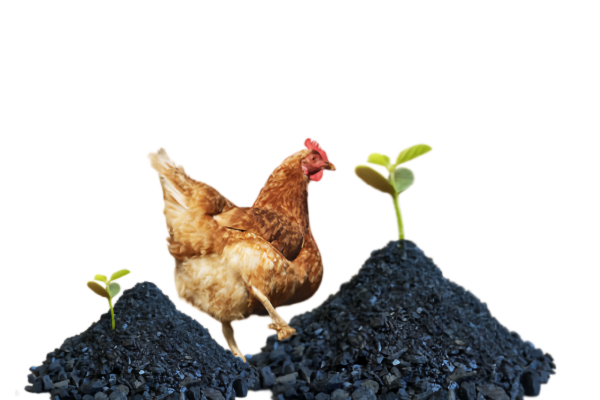
Processing Procedure: How Does the Carbon-Based Fertilizer Production Line Reduce Environmental Impact?
The carbon-based fertilizer production line includes several interconnected processes: composting, carbonization, crushing, granulating, drying, and packing. In the compost stage, producers use compost machines to decompose raw chicken dung, lowering moisture and eliminating harmful microorganisms. The carbonization equipment, often a furnace or pyrolysis chamber, converts organic matter into powdered carbon material under high temperature. This step locks carbon in a stable form and decreases greenhouse gas emissions compared with direct manure disposal. After carbonization, a crushing machine grinds the carbonized chicken manure into fine powder, preparing it for the granulation process.
The granulation procedure employs various pelletizers or granulators, such as disc granulator, double roller extrusion granulator, drum granulator, or new type organic fertilizer granulator. These machines transform powdery materials into uniform granules, pellets, or balls. The granule size affects nutrient release rate and fertilizer application efficiency. The drying machine then removes excess moisture to ensure storage stability, while the packing machine completes the final step of the production. Throughout this process, energy recovery systems may reuse heat from carbonization, thus reducing energy consumption and minimizing emissions. Each machine in this fertilizer processing line contributes to environmental protection by converting poultry waste into a valuable carbon-based product rather than letting it decompose uncontrolled.

Environmental Significance: Why Does Chicken Manure Carbon Fertilizer Support Sustainability?
The use of chicken manure in carbon-based fertilizer preparation provides multiple environmental advantages. First, it cuts down on the volume of poultry waste that might otherwise pollute soil and water sources. Second, it produces a carbon-rich material that enhances soil structure, increases water retention, and improves microbial diversity. The carbon component also stabilizes nutrients, reducing nitrogen loss and greenhouse gas release during fertilizer application. Moreover, the carbon-based fertilizer manufacturing procedure creates fewer odors and pathogens compared with traditional fresh manure use.
In addition, the granulation and pelletizing steps make fertilizer particles more uniform and easier to transport and apply, decreasing waste and preventing nutrient runoff. The overall production cycle follows a low-emission model that supports circular resource utilization. By integrating advanced processing equipment and energy-saving furnace technology, producers achieve both environmental protection and economic value. As a result, carbon-based fertilizer from chicken dung represents a bridge between waste recycling and sustainable soil management.
Conclusion
In summary, carbon-based fertilizer manufacturing from chicken manure transforms agricultural waste into a stable and eco-friendly product. The complete production process—from composting and carbonization to granulation, drying, and packaging—demonstrates how technology and sustainability intersect. Each step minimizes pollution, conserves resources, and enhances fertilizer quality. For clients who seek efficient solutions and reliable machinery in this field, a professional fertilizer equipment manufacturer—Yushunxin—offers complete carbon-based fertilizer production lines, including carbonization equipment, granulators, dryers, and related machines, to help achieve cleaner production and long-term environmental benefits. You can visit: https://www.charbasedfertilizermachine.com/product/chicken-dung-and-biochar-as-fertilizer/
